
Imagine waking up exhausted even after eight hours in bed. Your partner complains about the snoring that sounds like a chainsaw, and you’ve tried wearing a mask with pressurized air every night, only to give up because it’s uncomfortable or claustrophobic. You are not alone. Millions of people suffer from obstructive sleep apnea (OSA) and struggle with continuous positive airway pressure (CPAP) therapy. For those who cannot tolerate CPAP, there is a newer solution: upper airway stimulation. This implantable therapy offers a mask-free way to keep your airway open while you sleep.
What Is Upper Airway Stimulation?
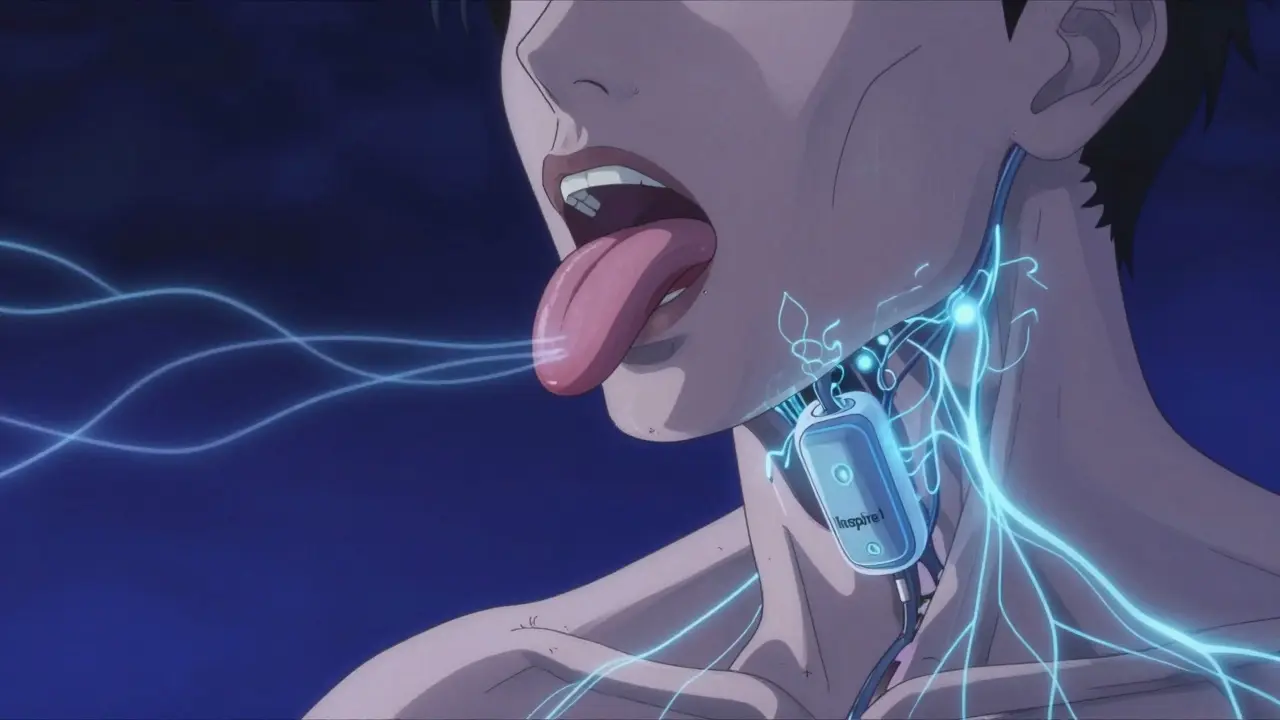
Upper airway stimulation (UAS) is a surgical treatment for obstructive sleep apnea that uses an implanted device to stimulate the hypoglossal nerve. The most well-known system is the Inspire Upper Airway Stimulation System, developed by Inspire Medical Systems. Unlike CPAP, which pushes air into your throat to keep it open, UAS works from the inside out. It sends mild electrical pulses to the hypoglossal nerve, which controls your tongue. When you inhale during sleep, the device stimulates this nerve, causing your tongue to move forward slightly. This simple movement prevents the soft tissues in your throat from collapsing and blocking your airway.
The concept is straightforward but effective. By keeping the airway patent during inhalation, the device reduces the number of apnea events-pauses in breathing-and hypopneas-shallow breaths. This leads to better oxygen levels, fewer wake-ups, and more restorative sleep. The FDA approved this technology in 2014, and since then, it has become a viable option for patients who have failed other treatments.
How the Device Works
The Inspire system consists of three main components implanted under the skin on the right side of your chest and neck:
- Implantable Pulse Generator (IPG): Think of this as a small pacemaker. It sits under the skin near your collarbone and generates the electrical signals.
- Sensing Lead: Placed in your chest wall, this lead monitors your breathing patterns. It detects when you are inhaling and tells the IPG to send a signal.
- Stimulation Lead: This thin wire runs up your neck to the hypoglossal nerve. It delivers the precise electrical pulse that moves your tongue.
You also get two external devices: a physician programmer used by your doctor to adjust settings and a patient remote control. Before bed, you use the remote to turn the system on. During the day, you turn it off. The device does not work while you are awake; it only activates during sleep when you inhale. This timing ensures you don’t feel the stimulation while talking or eating.
Who Is a Candidate for UAS?
Not everyone with sleep apnea qualifies for upper airway stimulation. Patient selection is critical for success. Generally, you must meet specific criteria set by the FDA and insurance providers. Here is what doctors look for:
- CPAP Intolerance: You must have tried CPAP therapy and found it ineffective or intolerable. Insurance companies usually require proof of attempted CPAP use before approving UAS.
- Moderate to Severe OSA: Your Apnea-Hypopnea Index (AHI) should be between 15 and 100 events per hour. An AHI below 15 is considered mild and may not justify surgery.
- BMI Limitations: Historically, candidates needed a BMI under 32 or 35. However, recent FDA approvals in 2023 expanded eligibility to include patients with a BMI up to 40, provided they do not have central sleep apnea.
- Airway Anatomy: You must undergo a drug-induced sleep endoscopy (DISE). This test checks how your airway collapses. If you have complete concentric collapse of the soft palate (the roof of your mouth), UAS may not work for you because the device primarily addresses tongue-based obstruction.
- No Central Sleep Apnea: UAS treats obstructive issues. If more than 25% of your apneas are central (caused by brain signaling problems rather than physical blockage), this therapy is not suitable.
The Surgical Procedure and Recovery
Getting the implant involves outpatient surgery performed under general anesthesia. The procedure typically takes two to three hours. Surgeons make three small incisions: one in the lower neck to place the sensing lead, one in the upper neck to access the hypoglossal nerve, and one below the collarbone to place the pulse generator.
Recovery is generally quick compared to traditional surgeries like uvulopalatopharyngoplasty (UPPP). Most patients go home the same day. You might experience soreness in the neck and chest for a few days. Light activities can often resume within a week, but heavy lifting and strenuous exercise are restricted for several weeks to allow the leads to heal securely.
The device is not activated immediately. You wait about four to six weeks for the incisions to heal. Then, your doctor performs a titration session. Using the programmer, they gradually increase the stimulation intensity until they find the level that opens your airway without causing discomfort. This process is similar to adjusting CPAP pressure levels.
Effectiveness and Clinical Results
Does it actually work? Clinical data suggests yes. The landmark STAR trial showed that at 12 months, patients experienced a 68% reduction in their AHI. The average AHI dropped from 29.3 events per hour to 9.0 events per hour. More importantly, 66% of participants achieved an AHI below 20, which is considered a significant improvement in sleep quality.
Long-term studies, such as the ADHERE Registry, confirm these results hold up over time. Patients report better daytime alertness, reduced fatigue, and improved cognitive function. One major advantage over CPAP is adherence. Many people abandon CPAP because the mask is uncomfortable or the noise is annoying. With UAS, there is no mask, no hose, and no noise. Studies show that hours of usage for UAS are significantly higher than for CPAP, meaning patients actually get the treatment they need.
| Feature | CPAP | Upper Airway Stimulation (Inspire) | Oral Appliances |
|---|---|---|---|
| Invasiveness | Non-invasive | Surgical implant | Non-invasive |
| Adherence Rate | Low (29-46% abandonment) | High (>90% adherence) | Moderate |
| Comfort | Mask required | No mask, internal device | Mouthpiece required |
| Cost | $1,000-$3,000 annually | $35,000-$40,000 upfront | $1,500-$3,000 |
| Reversibility | Yes | Yes (device can be removed) | Yes |
Potential Risks and Side Effects
Like any surgery, UAS carries risks. However, serious complications are rare. The overall major complication rate is less than 0.5%. Common minor side effects include:
- Tongue Numbness or Weakness: About 5% of patients report temporary tongue weakness or numbness shortly after surgery. This usually resolves within a few weeks as the nerve heals.
- Surgical Site Infection: Occurs in approximately 2% of cases. Standard antibiotic protocols minimize this risk.
- Lead Dislodgement: Rarely, the stimulation lead can move, requiring a minor adjustment surgery.
- Device Malfunction: Very rare, but the battery in the pulse generator lasts about seven years before needing replacement.
Some users mention an adjustment period. It can take a few weeks to get used to the sensation of the tongue moving. Others forget to turn the device on with the remote. Developing a consistent bedtime routine helps mitigate this behavioral challenge.
Cost and Insurance Coverage
The cost of upper airway stimulation is significant. The procedure averages $35,000 to $40,000, excluding surgeon fees. This is much higher than the annual cost of CPAP equipment. However, when you consider the long-term costs of replacing CPAP masks, filters, and machines, plus the potential health savings from treating severe sleep apnea, the value proposition improves.
Insurance coverage has expanded dramatically. As of 2023, 95% of Medicare beneficiaries and 85% of commercially insured patients have coverage for UAS therapy. Approval usually requires documentation of CPAP failure and meeting the anatomical criteria. It is essential to check with your specific insurer and get pre-authorization before scheduling surgery.
Is Upper Airway Stimulation Right for You?
If you have moderate to severe obstructive sleep apnea and cannot stand CPAP, UAS is a promising alternative. It offers a high degree of freedom and comfort, allowing you to sleep naturally without bulky equipment. The key is careful patient selection. You need to work with a sleep specialist and an otolaryngologist (ENT) to determine if your anatomy is suitable.
It is not a first-line treatment. Doctors will always recommend lifestyle changes and CPAP first. But if those fail, UAS provides a robust, evidence-based solution that has helped thousands of patients regain restful sleep. The technology continues to evolve, with broader eligibility criteria and smaller devices making it accessible to more people.
Does the Inspire device hurt?
The surgery itself is performed under general anesthesia, so you feel no pain during the procedure. Afterward, you may experience soreness in the neck and chest for a few days, manageable with pain medication. During sleep, the stimulation is designed to be comfortable. Some patients feel a slight tingling or movement in the tongue, but most do not notice it once asleep. If the sensation is uncomfortable, your doctor can adjust the intensity during a follow-up visit.
Can I remove the implant if I don't like it?
Yes, upper airway stimulation is reversible. The device can be surgically removed if you decide it is not for you or if you switch back to CPAP. However, removal is another surgical procedure. Most patients choose to keep the device due to high satisfaction rates and improved sleep quality.
How long does the battery last?
The implantable pulse generator (IPG) battery typically lasts about seven years. When the battery runs low, you will need a minor outpatient surgery to replace just the generator. The leads usually remain in place unless they have shifted or damaged.
Will insurance cover the cost?
Most major insurance plans, including Medicare and many commercial insurers, cover upper airway stimulation for eligible patients. Eligibility requires proof of CPAP intolerance, moderate to severe OSA, and specific anatomical features confirmed by endoscopy. Always verify coverage with your provider and obtain pre-authorization before surgery.
What is the difference between UAS and oral appliances?
Oral appliances are custom-made mouthpieces that push the jaw forward to open the airway. They are non-invasive and good for mild to moderate sleep apnea. UAS is an implanted device that stimulates the nerve controlling the tongue. UAS is generally more effective for severe sleep apnea and offers higher adherence rates because there is no hardware in the mouth or face.