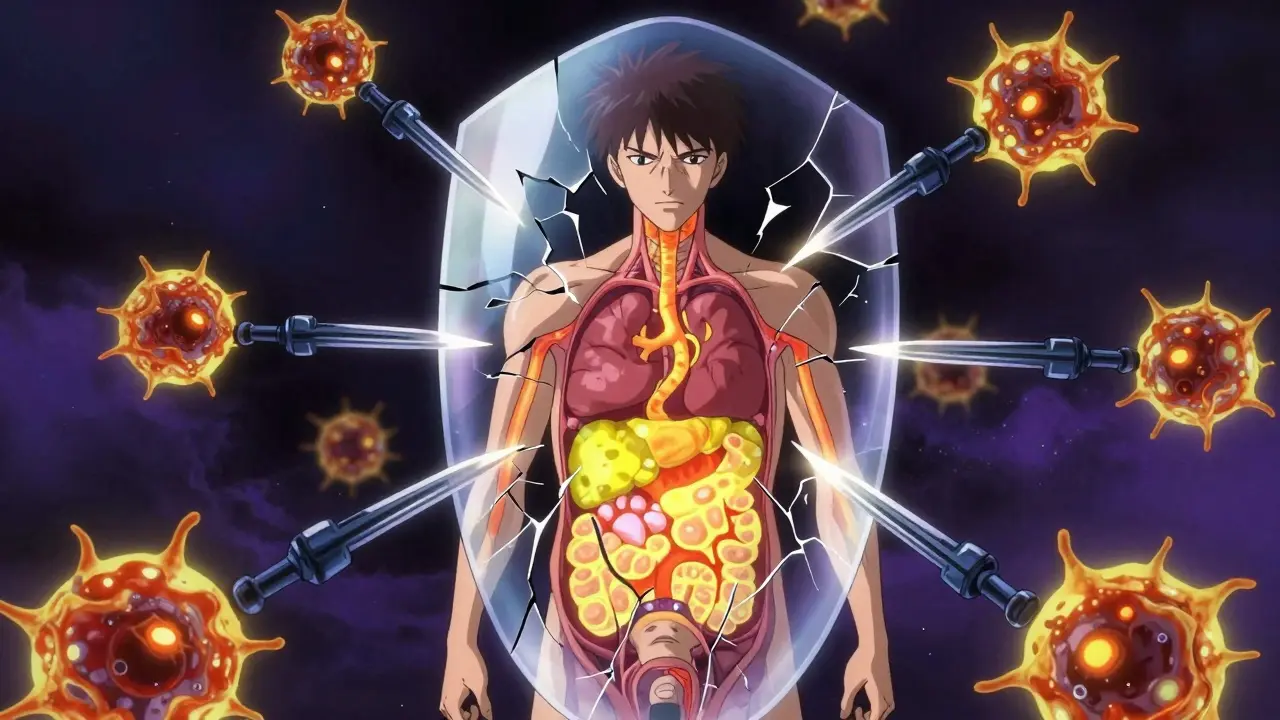
Imagine your immune system, which usually acts as a protective shield, suddenly turning its weapons toward your own healthy organs. This isn't a theoretical scenario; it's a real-world challenge for thousands of people undergoing modern cancer treatment. When we use immune checkpoint inhibitors is a class of drugs that remove the brakes from the immune system, allowing T-cells to attack tumors more effectively, we risk "over-activating" the body. The result? Immune-Related Adverse Events (or irAEs) are inflammatory side effects caused by an overactive immune response that damages healthy tissues during immunotherapy. While these drugs are saving lives, knowing how to spot and stop these side effects is the difference between a successful recovery and a medical emergency.
Quick Takeaways: Managing irAEs
- What they are: Inflammatory reactions that can hit any organ, often appearing within the first three months of treatment.
- The Gold Standard: Corticosteroids (like prednisolone) are the primary tool to calm the immune system.
- The Danger Zone: Grade 3 and 4 events (severe or life-threatening) require immediate hospital care and IV steroids.
- The Good News: Treating these side effects generally does not make the cancer treatment less effective.
- Red Flag: Any new symptom-no matter how minor-should be reported to an oncology team immediately.
Why do irAEs happen and who is at risk?
To understand irAEs, you have to understand how Immune Checkpoint Blockade works. Normally, your body has "checkpoints" to prevent the immune system from attacking itself. Some cancers hijack these checkpoints to hide. Drugs like Ipilimumab (targeting CTLA-4) or those targeting PD-1 and PD-L1 break these locks. However, once the brakes are gone, the immune system can become indiscriminately aggressive.
The risk varies by drug. Data shows that CTLA-4 inhibitors carry the highest incidence rate at about 83%, followed by PD-1 inhibitors at 72%, and PD-L1 inhibitors at 60%. While most people see symptoms in the first 90 days, some develop them months after they've finished their last dose. It's a bit of a wildcard; you might feel fine for a year and then suddenly develop a skin rash or gut issue.
Recognizing the Signs Across Different Organs
irAEs aren't one-size-fits-all. They can look like a common cold, a stomach bug, or something far more sinister. The most frequent issues usually hit the skin, gut, and endocrine system, but rare cases can be fatal, such as myocarditis (heart inflammation).
Here is how they typically manifest:
- Dermatologic: It usually starts as an itchy rash or dry, peeling skin. While annoying, it's often the first warning sign that the immune system is ramping up.
- Gastrointestinal: This looks like Colitis (inflammation of the colon). Watch for severe diarrhea, abdominal pain, or blood in the stool. This is a high-priority event because it can lead to bowel perforation if ignored.
- Endocrine: Your hormones can go haywire. Hypophysitis (inflammation of the pituitary gland) or thyroid dysfunction are common. Interestingly, these usually don't need steroids; they need lifelong hormone replacement therapy.
- Pulmonary: Pneumonitis is the big worry here. A new, dry cough or shortness of breath can signal that the lungs are becoming inflamed.
- Hepatic: Inflammation of the liver (hepatitis) is often "silent," meaning it's found through blood tests showing elevated liver enzymes rather than outward symptoms.
Grading Severity: The CTCAE Scale
Doctors don't just say a side effect is "bad"; they use the Common Terminology Criteria for Adverse Events (CTCAE). This system ensures everyone is speaking the same language when deciding how aggressively to treat an irAE.
| Grade | Severity | Typical Symptoms | General Action |
|---|---|---|---|
| Grade 1 | Mild | Mild itching, slight fatigue | Monitor closely; no steroids usually needed. |
| Grade 2 | Moderate | Moderate diarrhea, skin rash requiring cream | Start oral steroids (e.g., Prednisolone); pause immunotherapy. |
| Grade 3 | Severe | Severe diarrhea, significant shortness of breath | Urgent IV steroids; immediate specialist consult. |
| Grade 4 | Life-threatening | Respiratory failure, shock, severe heart issues | Emergency hospitalization; high-dose IV steroids. |
The Treatment Roadmap: From Steroids to Advanced Therapies
The goal of treating an irAE is to dampen the immune response without completely shutting down the body's ability to fight the cancer. The cornerstone of this effort is Corticosteroids.
For moderate cases (Grade 2-3), doctors typically prescribe oral prednisolone at 1 mg/kg per day. The immunotherapy is paused until the symptoms drop back down to Grade 1. For the severe stuff (Grade 3-4), the approach is more aggressive: intravenous methylprednisolone (1-2 mg/kg/day, potentially up to 1 gram per day) for three days, followed by high-dose oral steroids.
The trickiest part is the Steroid Taper. You can't just stop taking steroids abruptly, or the inflammation might come roaring back. Most protocols require a gradual reduction over 4 to 6 weeks. This is where many patients struggle; long-term steroid use often leads to insomnia, weight gain, and mood swings, which can either be as frustrating as the irAE itself.
But what happens if steroids don't work? These are called "steroid-refractory" cases. If there's no improvement after 48 hours, doctors bring in the big guns-alternative immunosuppressives:
- Infliximab: A monoclonal antibody that targets TNF-α, often used for stubborn colitis.
- Vedolizumab: An anti-integrin antibody that is showing promising results (up to 68% response) for steroid-refractory colitis.
- Mycophenolate Mofetil: Often used for severe skin or liver reactions.
- IVIG (Intravenous Immune Globulin): Used in complex neurological or cardiac cases.
The Multidisciplinary Approach: Why One Doctor Isn't Enough
Treating an irAE is a team sport. An oncologist knows the cancer, but they might not be an expert in the intricacies of the colon or the lungs. For a Grade 3 event, the clock starts ticking; institutional protocols often require a specialist (like a gastroenterologist or pulmonologist) to be consulted within 24 hours.
For example, if a patient develops neurotoxicity, a neurologist is vital to distinguish between the drug's side effects and other neurological crises. This coordinated effort is why large cancer centers often have dedicated "immune toxicity teams." Community practices that implement these structured protocols have seen severe complication rates drop significantly-in some cases by over 30%-simply because they caught the symptoms earlier and coordinated care faster.
Common Pitfalls and Pro Tips for Patients
The biggest danger in irAE management is delayed reporting. Many patients mistake the first signs of colitis for a simple stomach bug or pneumonitis for a mild cold. Because they don't want to "bother" their doctor or fear their cancer treatment will be stopped, they wait. This delay can turn a treatable Grade 2 event into a life-threatening Grade 4 crisis.
If you or a loved one are on immunotherapy, keep a "symptom diary." Note any new rash, change in bowel habits, or shortness of breath. Remember: the data shows that using steroids to treat these side effects does not stop the immunotherapy from killing the tumor. You aren't sacrificing your cancer progress by reporting a side effect; you're ensuring you're healthy enough to keep fighting.
Will taking steroids for irAEs make my cancer come back?
Based on current clinical evidence, immunosuppressive therapy used to manage irAEs does not negatively impact the overall tumor response to immune checkpoint inhibitors. The priority is to stabilize the patient's organ function so they can safely continue their cancer treatment.
How long does it take for irAE symptoms to go away?
Most irAEs can be controlled and reversed within 4 to 8 weeks of starting treatment. However, about 10-15% of cases become chronic, requiring long-term management like lifelong hormone replacement for thyroid issues.
What is the most dangerous irAE to watch for?
While all severe events are serious, myocarditis (heart inflammation) is one of the rarest but most fatal manifestations. Symptoms like sudden chest pain or shortness of breath should be treated as an emergency.
Can an irAE happen after I've finished my treatment?
Yes. While most events occur within the first three months, irAEs can develop months or even years after the immunotherapy has been discontinued. Always inform future doctors that you have a history of ICI therapy.
What should I do if I notice a skin rash during immunotherapy?
Contact your oncology team immediately. Even a mild rash can be the first indicator of a systemic immune response. Early intervention can prevent the progression to more severe organ inflammation.
Next Steps and Troubleshooting
If you are a patient or caregiver, your first step is to create a direct line of communication with your care team. Ask them: "What is the specific protocol for reporting symptoms after hours?" and "Who are the specialists on my team for gut or lung issues?"
If you are experiencing steroid side effects like insomnia or mood swings during the tapering process, don't just push through it. Talk to your doctor about adjusting the taper speed or adding supportive care. The goal is a safe return to baseline, and your quality of life during that process matters.