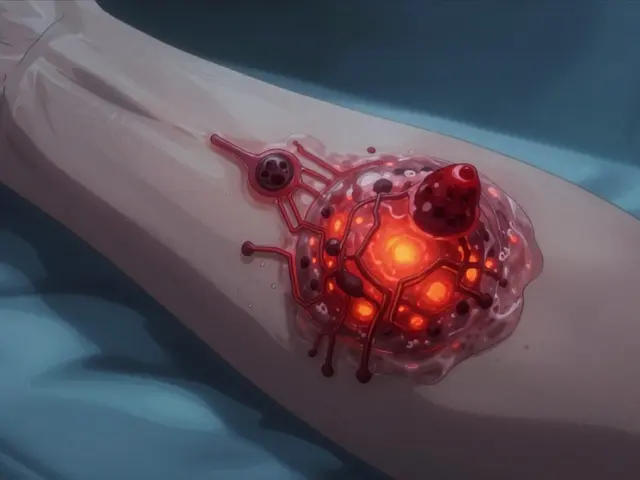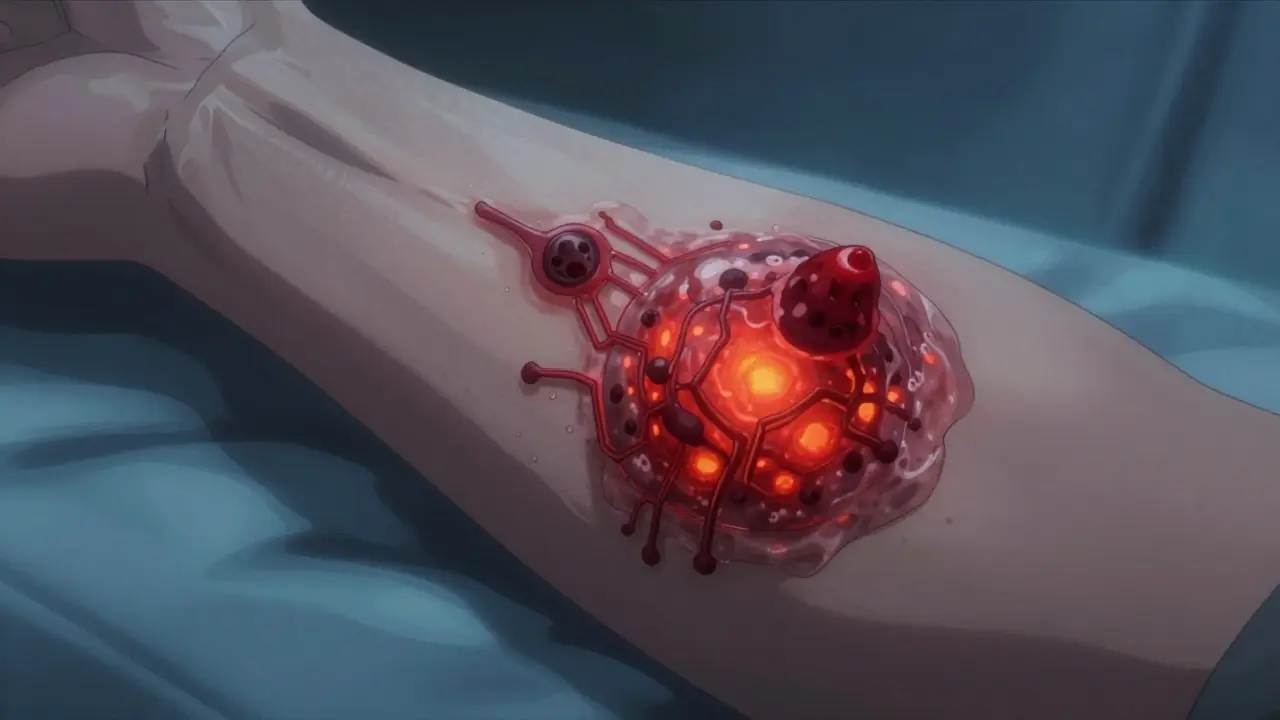
It starts as a small red bump. You might mistake it for a spider bite or a simple pimple. But when it swells, fills with pus, and refuses to heal despite your best efforts, you realize this is different. This is likely MRSA, a strain of Staphylococcus aureus bacteria resistant to common antibiotics like methicillin, oxacillin, and penicillin. For decades, MRSA was the boogeyman of hospital wards, lurking in surgical suites and intensive care units. Today, however, that line has blurred. The bacteria have escaped their traditional confines, thriving in gyms, locker rooms, and households. Understanding the difference between community-acquired and hospital-associated strains is no longer just academic-it’s essential for getting the right treatment fast.
The Two Faces of MRSA
To understand how MRSA spreads, you first need to know what you are dealing with. While both types are caused by the same bacterium, Staphylococcus aureus, they behave differently. Historically, we divided them into two camps: Hospital-Associated MRSA (HA-MRSA) and Community-Associated MRSA (CA-MRSA). The Centers for Disease Control and Prevention (CDC) defines CA-MRSA as an infection occurring in someone who hasn’t been hospitalized, had surgery, or lived in a nursing home within the past year. HA-MRSA, conversely, strikes patients already inside the healthcare system.
But here is the catch: these categories are becoming outdated. Recent data shows significant overlap. A study published in the Canadian Medical Association Journal found that nearly 30% of hospital-onset MRSA infections were actually caused by community strains. Meanwhile, community cases increasingly show resistance patterns typical of hospital strains. The distinction matters because CA-MRSA tends to be more virulent but less resistant to non-beta-lactam antibiotics, while HA-MRSA is often multi-drug resistant but less likely to cause severe tissue damage outside of medical devices.
| Feature | Community-Associated (CA-MRSA) | Hospital-Associated (HA-MRSA) |
|---|---|---|
| Primary Setting | Gyms, schools, households, prisons | Hospitals, nursing homes, dialysis centers |
| Genetic Marker (SCCmec) | Types IV and V (smaller elements) | Types I, II, and III (larger elements) |
| Virulence Factors | Often produces Panton-Valentine leukocidin (PVL) | Rarely produces PVL |
| Antibiotic Resistance | Lower resistance to clindamycin, TMP-SMX | High resistance to multiple classes (erythromycin, fluoroquinolones) |
| Typical Presentation | Skin abscesses, necrotizing pneumonia | Bloodstream infections, surgical site infections |
| Predominant Clone (US) | USA300 | ST239, ST5 |
How MRSA Spreads: The Transmission Dynamics
You don’t need to be sick to carry MRSA. About 1.3% of the general population is colonized with the bacteria, meaning it lives on their skin or in their nose without causing symptoms. Colonization is the silent engine of transmission. When you touch a contaminated surface and then touch your own broken skin, you can introduce the bacteria into your body. If your immune system can’t keep up, infection sets in.
In hospitals, transmission is often linked to invasive procedures. Catheters, ventilators, and surgical wounds provide direct entry points for HA-MRSA. The bacteria thrive here because patients are immunocompromised and heavily exposed to antibiotics, which kill off competing good bacteria. In the community, the story is different. CA-MRSA spreads through close skin-to-skin contact and shared personal items. Think about sharing towels at a gym, using the same razors, or playing contact sports like rugby or wrestling. Crowded environments amplify this risk. Studies show people living in military barracks face a 12.3 times higher risk of colonization compared to the general public. Prisons and homeless shelters see similarly elevated rates due to limited hygiene resources and high density.
A particularly concerning reservoir is among people who inject drugs. The USA300 clone, which dominates CA-MRSA cases in the United States, is highly prevalent in this group. Frequent skin punctures, reuse of syringes, and poor injection site hygiene create perfect conditions for the bacteria to enter the bloodstream. From there, it can spread to others through shared equipment or casual contact if proper precautions aren’t taken.

Why Genetics Matter: SCCmec and Virulence
If you look under the microscope, CA-MRSA and HA-MRSA look identical. The difference lies in their DNA. Specifically, in a genetic element called staphylococcal cassette chromosome mec (SCCmec). This piece of DNA carries the gene that makes the bacteria resistant to methicillin and related antibiotics. HA-MRSA typically carries larger SCCmec types (I, II, and III). These large elements also carry genes for resistance to other antibiotics, making HA-MRSA harder to treat. CA-MRSA usually carries smaller SCCmec types (IV and V). Because these elements are smaller, they confer fewer resistances but may allow the bacteria to replicate faster and produce more toxins.
One such toxin is Panton-Valentine leukocidin (PVL). PVL destroys white blood cells, leading to rapid tissue death. This is why CA-MRSA infections often present as painful, deep-seated abscesses or even necrotizing pneumonia, where lung tissue dies quickly. HA-MRSA rarely produces PVL, so its infections tend to be more insidious, spreading slowly through bloodstreams or along catheter lines rather than exploding outward in soft tissue.

Treatment Strategies: What Works and What Doesn’t
Treating MRSA requires precision. Using the wrong antibiotic not only fails to cure the infection but also encourages further resistance. For mild skin infections caused by CA-MRSA, incision and drainage alone are often sufficient. The physical removal of pus reduces the bacterial load enough for your immune system to take over. However, if antibiotics are needed, clinicians look for agents that CA-MRSA remains susceptible to. Clindamycin works in about 96% of CA-MRSA cases. Trimethoprim-sulfamethoxazole (TMP-SMX) is effective in 92% of cases, and tetracyclines work in roughly 89%. These oral medications are accessible and cost-effective, allowing treatment at home.
HA-MRSA presents a tougher challenge. Due to its broad resistance profile, many standard antibiotics fail. Erythromycin resistance hits 98%, and fluoroquinolone resistance reaches 92%. In hospital settings, intravenous vancomycin remains the gold standard for serious HA-MRSA infections. Daptomycin and linezolid are alternative options for complicated skin infections or pneumonia. The key is speed. Delaying appropriate therapy in HA-MRSA cases can lead to sepsis, endocarditis, or osteomyelitis, all of which carry high mortality rates.
A growing concern is the emergence of hybrid strains. These combine the virulence of CA-MRSA with the resistance of HA-MRSA. As community strains enter hospitals and vice versa, recombination events occur. This means empirical therapy-starting treatment before lab results return-must account for shifting resistance patterns. Clinicians can no longer assume a community patient will respond to clindamycin or a hospital patient will require vancomycin without testing.
Prevention: Breaking the Chain
Preventing MRSA starts with hygiene, but it goes deeper than just washing hands. In the community, avoid sharing personal items like towels, razors, or athletic gear. Keep cuts and scrapes clean and covered until healed. Shower immediately after workouts, especially in communal locker rooms. If you live in a crowded environment, advocate for better sanitation protocols. Regular cleaning of high-touch surfaces with EPA-approved disinfectants can reduce environmental reservoirs.
In healthcare settings, contact precautions are critical. Healthcare workers must wear gloves and gowns when entering rooms of patients known or suspected to have MRSA. Hand hygiene with alcohol-based rubs or soap and water before and after every patient contact is non-negotiable. Decolonization protocols, involving nasal mupirocin ointment and chlorhexidine body washes, are sometimes used for patients undergoing surgery or those repeatedly infected. However, decolonization is temporary; recurrence is common if environmental sources aren’t addressed.
Surveillance is another pillar of prevention. Hospitals track MRSA rates meticulously, but community surveillance lags behind. Integrated approaches that monitor transmission across the entire healthcare-community continuum are needed. Without this, we remain reactive rather than proactive. The goal isn’t just to treat individual infections but to shrink the overall reservoir of MRSA in society.
Can you get MRSA from touching a doorknob?
Yes, it is possible. MRSA can survive on dry surfaces for days to weeks. If you touch a contaminated doorknob and then touch a break in your skin, transmission can occur. However, intact skin is an excellent barrier. The risk increases significantly if you have open wounds, recent surgeries, or a compromised immune system.
Is MRSA always fatal?
No. Most MRSA infections are mild skin abscesses that resolve with drainage or oral antibiotics. Fatal outcomes are rare and typically associated with invasive infections like sepsis, pneumonia, or endocarditis, particularly in hospitalized patients or those with underlying health conditions.
How long does it take to clear MRSA?
For simple skin infections, healing takes 1-2 weeks with proper care. However, clearing colonization from the nose or skin can take months. Some individuals remain carriers indefinitely. Recurrence is common if hygiene practices aren’t maintained or if re-exposure occurs.
What is the difference between MRSA and staph?
Staph refers to Staphylococcus aureus, a common bacterium found on many people’s skin. MRSA is a specific strain of staph that has developed resistance to methicillin and other beta-lactam antibiotics. All MRSA is staph, but not all staph is MRSA. Non-resistant staph infections are easier to treat with standard antibiotics.
Can pets transmit MRSA to humans?
Yes, although it is less common than human-to-human transmission. Dogs and cats can carry MRSA, particularly if they have been treated for skin infections. Close contact, such as kissing or sleeping in bed with an infected pet, can facilitate transfer. Good hygiene and prompt veterinary care for pet infections reduce this risk.