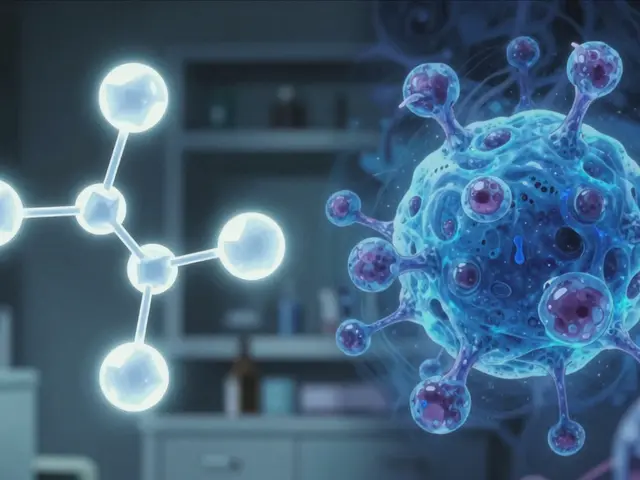
Imagine you’ve been taking a life-saving medication for years. It works, but it’s expensive. One day, your doctor mentions a cheaper alternative that is “just like” your current drug. You might assume this new option is an exact copy, right? Wrong. If your medication is a biologic-a complex protein made from living cells-the rules change completely. This is where the confusion between biosimilars and authorized generics begins.
In the world of small-molecule drugs (like aspirin or statins), an authorized generic is chemically identical to the brand-name version. But biologics are different. They are large, complex molecules produced in living systems, making them impossible to replicate exactly. Instead, we have biosimilars-highly similar versions that meet strict safety and efficacy standards. Understanding this distinction isn’t just academic; it affects your wallet, your treatment plan, and your peace of mind.
The Core Difference: Exact Copies vs. Highly Similar Versions
To grasp why biosimilars exist, you first need to understand what they aren’t. They are not generics in the traditional sense. An authorized generic is an exact chemical copy of a brand-name small molecule drug, marketed by the brand company itself or through a subsidiary. Because small molecules are simple chemicals, manufacturers can create identical copies using the Abbreviated New Drug Application (ANDA) pathway established by the Hatch-Waxman Act of 1984. These generics must prove bioequivalence, meaning they deliver the same amount of active ingredient into your bloodstream in the same amount of time as the brand name.
Biosimilars operate under a completely different regulatory framework: the Biologics Price Competition and Innovation Act (BPCIA) of 2009. Biological products are generally large, complex molecules produced through biotechnology in living systems, such as microorganisms, plant cells, or animal cells. Because of their structural complexity and heterogeneity, it is impossible to make an identical copy of a biologic medication. Even slight variations in the manufacturing process-like changes in temperature or nutrient supply-can result in minor differences between batches. Therefore, the FDA defines a biosimilar as a biologic medication that is highly similar to an already approved reference product with no clinically meaningful differences in safety, purity, or potency.
| Feature | Authorized Generic | Biosimilar |
|---|---|---|
| Molecule Type | Small molecule (simple chemical) | Biologic (large, complex protein) |
| Regulatory Pathway | ANDA (Hatch-Waxman Act) | BLA (BPCIA of 2009) |
| Identity to Brand | Chemically identical | Highly similar, no clinically meaningful differences |
| Cost Savings | Typically 80-85% | Typically 10-50% |
| Substitution Rules | Routine automatic substitution | Depends on "interchangeable" designation and state laws |
What Makes a Biosimilar "Interchangeable"?
Not all biosimilars are created equal when it comes to pharmacy substitution. The term “interchangeable” is specific and powerful. An interchangeable biosimilar is a subset of biosimilars that meets additional requirements allowing for automatic substitution at the pharmacy level without prescriber intervention. To earn this designation, the manufacturer must demonstrate through clinical trials that switching back and forth between the biosimilar and the reference product does not pose greater risks than staying on the reference product alone. This includes proving consistent safety and efficacy even if a patient switches multiple times.
This functionality mirrors how authorized generics work in the small-molecule space. When you pick up a prescription for a brand-name drug like Lipitor, the pharmacist often hands you an authorized generic or a third-party generic without calling your doctor. For biologics, however, this automatic substitution depends heavily on two factors: whether the biosimilar has received the “interchangeable” designation from the FDA, and whether your state’s laws permit pharmacists to substitute it. As of late 2023, only 32 states have active interchangeability frameworks that allow this seamless switch. In other states, your doctor may need to explicitly write the biosimilar name on the prescription.
The Science Behind the Approval Process
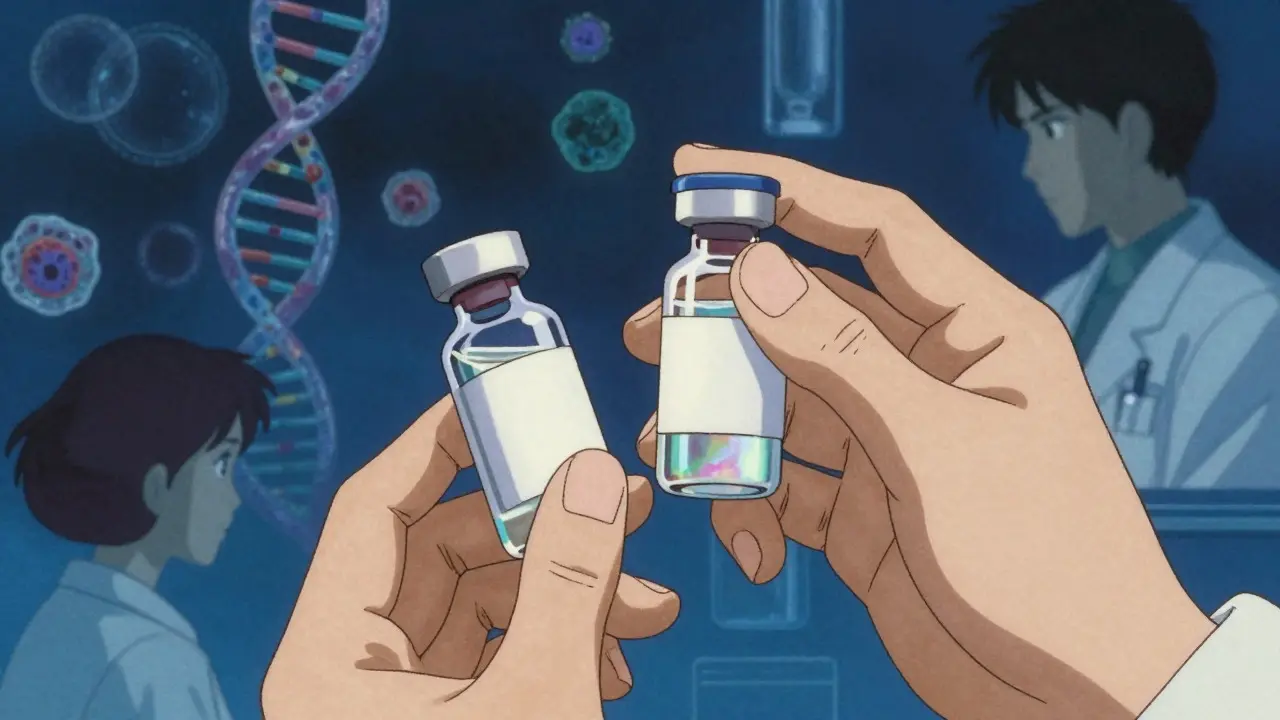
You might wonder: if they aren’t identical, how do we know biosimilars are safe? The answer lies in the FDA’s rigorous “totality of the evidence” approach. Unlike generics, which primarily rely on bioequivalence studies, biosimilars undergo extensive head-to-head comparisons with their reference products. Manufacturers must provide data on:
- Structural and functional attributes: Detailed analysis of the molecule’s size, shape, and biological activity.
- Pharmacokinetics and Pharmacodynamics: How the body absorbs, distributes, metabolizes, and excretes the drug, and how it affects the body.
- Immunogenicity: Whether the biosimilar triggers an immune response (antibody formation) differently than the reference product.
- Clinical Efficacy and Safety: Results from clinical trials showing comparable outcomes in patients.
Dr. Peter L. Salgo, Professor of Medicine at Columbia University, noted in a 2022 FDA advisory committee meeting that this totality of evidence approach is scientifically sound and provides appropriate confidence in safety and efficacy. The FDA requires that biosimilars have the same mechanism of action, route of administration, dosage form, and strength as their reference product. Additionally, all biosimilars must be manufactured under Current Good Manufacturing Practice (cGMP) requirements to prevent mistakes or impurities. This level of scrutiny ensures that while the molecules may have minor, expected variations, their clinical performance is virtually indistinguishable from the original.
Real-World Impact: Costs, Access, and Patient Experiences
The primary driver behind the rise of biosimilars is cost. Small-molecule generics typically offer 80-85% savings compared to brand names. Biosimilars, due to higher manufacturing and development costs, usually offer 10% to 50% reductions. While this might seem modest compared to generics, it translates to billions in savings. The Congressional Budget Office estimates $53 billion in Medicare savings alone between 2024 and 2033. Globally, the biosimilars market was valued at $10.1 billion in 2022 and is projected to reach $58.6 billion by 2030.
But what about the patients? Real-world experiences are mixed but increasingly positive. On the American Cancer Society’s forum, breast cancer survivors reported switching to biosimilar trastuzumab (Herceptin) with identical results and significantly lower out-of-pocket costs-one user saw their per-infusion cost drop from $1,200 to $450. However, challenges remain. A 2022 Arthritis Foundation survey found that 37% of patients experienced disruption when forced to switch to a biosimilar by insurance plans, though only 12% reported actual worsening of symptoms. Some concerns arise from frequent switching between multiple biosimilars, with some pharmacists reporting new injection site reactions after consecutive switches, although causation remains unclear.
Adoption rates are climbing. In the U.S., biosimilar utilization increased from 5% of biologic prescriptions in 2019 to 18% in 2022. Hospital systems are leading the way, with 87% of U.S. hospitals having formal biosimilar adoption protocols. Yet, barriers persist. Physician and patient hesitancy, particularly in oncology settings, remains significant. Dr. Gary Lyman of Fred Hutchinson Cancer Research Center highlighted that despite scientific equivalence, trust takes time to build. Education plays a crucial role here; the American College of Rheumatology reports it takes an average of 6-8 hours of continuing medical education for physicians to feel fully comfortable prescribing biosimilars.

Navigating Insurance and State Laws
If you’re considering a biosimilar, your insurance coverage and location matter. Coverage varies widely. A 2023 KFF analysis showed that 62% of Medicare Part D plans cover biosimilars at the same tier as reference products, while 28% place them in a preferred specialty tier with lower cost-sharing. Always check your formulary before assuming a switch will save money. Sometimes, prior authorization or step therapy requirements can complicate access.
State laws also dictate your options. With 49 states having laws governing biosimilar substitution, the landscape is fragmented. If you live in California, New York, or Texas, you likely benefit from robust interchangeability frameworks. In other states, your pharmacist may not be able to substitute an interchangeable biosimilar without contacting your prescriber. This patchwork system can lead to inconsistencies in care and access. Advocacy groups continue to push for standardized national policies to simplify this process for both providers and patients.
The Future of Biosimilars and Market Dynamics
The future looks bright for biosimilars. The FDA released updated guidance in May 2023 to clarify labeling and streamline the approval process for interchangeable products. In November 2023, the agency approved Amjevita (adalimumab-atto), the first interchangeable biosimilar for Humira, a blockbuster rheumatoid arthritis drug. This move is expected to accelerate market penetration significantly. Major players like Amgen, Sandoz, and Pfizer dominate the space, with 76 total FDA-approved biosimilars as of late 2023.
However, patent litigation remains a hurdle. Reference product manufacturers file an average of 14.7 patent challenges per biosimilar product, delaying competition. Despite this, the impending patent cliffs for major biologics mean $115 billion in global sales will face biosimilar competition by 2028. The FDA’s Biosimilars Action Plan aims to approve 15-20 new biosimilars annually by 2025, enhancing efficiency across the product lifecycle. As more options enter the market, prices should continue to fall, improving access for millions of patients worldwide.
Are biosimilars exactly the same as the original biologic drug?
No, biosimilars are not exact copies. Due to the complex nature of biologic molecules produced in living systems, slight variations are normal and expected. However, biosimilars are “highly similar” to the reference product with no clinically meaningful differences in safety, purity, or potency. They must undergo rigorous testing to prove comparable efficacy and safety.
Can my pharmacist automatically substitute a biosimilar for my prescribed biologic?
Only if the biosimilar is designated as “interchangeable” by the FDA and your state laws allow automatic substitution. Currently, only 32 states have active interchangeability frameworks. In other states, your doctor must specifically prescribe the biosimilar, or the pharmacist must contact your prescriber for permission.
How much cheaper are biosimilars compared to brand-name biologics?
Biosimilars typically offer cost savings of 10% to 50% compared to reference biologics. This is less than the 80-85% savings seen with small-molecule generics, but still represents significant value given the high cost of biologic therapies. Actual savings depend on insurance coverage, formulary tiers, and negotiation between manufacturers and payers.
Is it safe to switch back and forth between a biosimilar and the reference product?
For biosimilars with “interchangeable” designation, yes. These products have undergone additional clinical trials demonstrating that switching back and forth does not pose greater risks than remaining on the reference product. For non-interchangeable biosimilars, frequent switching is generally discouraged unless medically necessary, as long-term data on alternation is more limited.
Why are there so few biosimilars compared to generic drugs?
Developing biosimilars is more complex and expensive than creating small-molecule generics. Biologics require sophisticated manufacturing processes, extensive clinical trials, and longer regulatory review times. Additionally, patent litigation by brand-name manufacturers often delays biosimilar entry into the market. As of late 2023, only 76 biosimilars were FDA-approved, compared to thousands of generic small-molecule drugs.