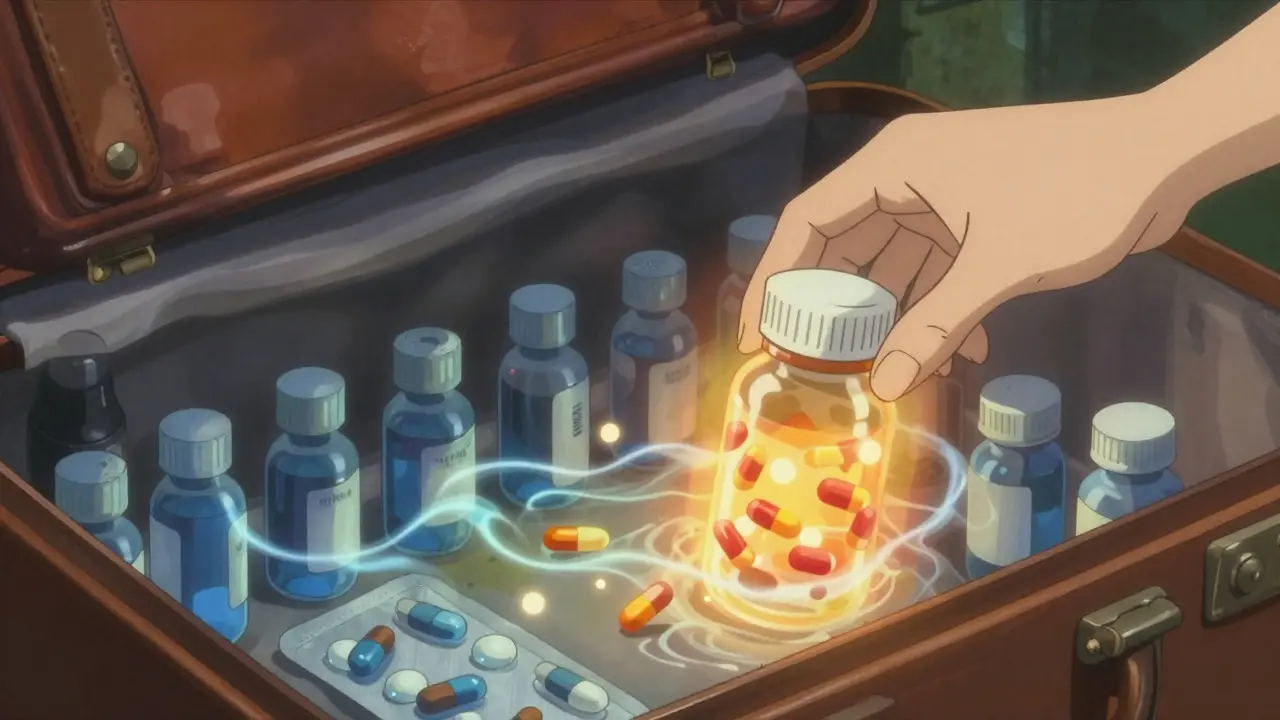
Why Your Medicine Might Fail Before You Do
You pack your bags, double-check your passport, and board the plane excited for a long-awaited trip. But there is one crucial passenger in your luggage that could let you down: your medicine. Many travelers assume their pills and injections are safe in a suitcase, but reality often tells a different story. Heat, humidity, and pressure changes can silently degrade the active ingredients in your drugs, rendering them useless when you actually need them.
The concept of Medication Shelf Life refers to the period during which a pharmaceutical product remains safe and effective under specified storage conditions isn't just about the date printed on the bottle. It is heavily dependent on how you handle the drug while moving across borders. In fact, improper storage causes billions of dollars in waste annually because patients unknowingly take expired or compromised doses. Let's look at exactly how to protect your health gear during those extended getaways.
Understanding the Science Behind Stability
Before we talk about packing, you need to understand why your medication is sensitive. Not all drugs react the same way to temperature spikes. For example, standard tablets like acetaminophen might hold up decently in a hot car for a day. However, biologics and injectables like insulin are much more fragile. These products usually require strict refrigeration between 36°F and 46°F (2°C to 8°C).
If insulin sits at 77°F (25°C) for too long, its potency drops significantly-studies suggest a loss of efficacy by roughly 1.2% per hour outside the ideal range. Imagine trying to manage your blood sugar with medication that has lost nearly a quarter of its power before you even return home. This is what experts call a "temperature excursion." A single excursion above or below the target zone can trigger a chemical breakdown that ruins the remaining shelf life, even if you put it back in the fridge immediately.
Packing Essentials for Cold Chain Safety
When you know your medication needs to stay cold, you need specialized gear. Standard suitcases offer zero insulation. If you are traveling in summer or to a tropical destination, you must use a dedicated medical cooler. Look for ones labeled specifically for medical use rather than picnic coolers, which tend to trap moisture.
Here is a quick breakdown of cooling options that work reliably for long trips:
| Method Type | Duration of Coolth | Risk Factor |
|---|---|---|
| Frozen Gel Packs | Up to 48 hours | Low risk if wrapped; high risk if touching med directly (freezing damage) |
| EVP (Evaporative) Bags | ~24 hours | Safe temperature control; requires water activation |
| Tech-Powered Coolers | Unlimited (battery) | Risk of battery failure; requires airport charging access |
| Paperboard Insulated Mailers | ~12 hours | Budget-friendly; poor heat resistance |
Gel packs are the most common choice, but there is a trick: never wrap your gel pack tightly against the vial or pen. Wrap the pack in a small towel or bubble wrap. Direct contact can freeze the medication, which damages biological structures permanently. If you are flying, make sure the gel packs are frozen solid when going through security, or you may have to discard them. Partially frozen packs look liquid to some officers.
Navigating Airport Security Without Issues
The stress of getting through security can make you forget your meds are in the bin. According to Transportation Security Administration guidelines, medications are exempt from the standard 3.4-ounce limit for liquids. However, you still need to declare them.
Keep your medicines in your carry-on, not checked bags. Checked cargo holds can drop to freezing temperatures, effectively killing your insulin. Place your meds in a separate clear plastic bag inside your personal item or pocket. When you approach the checkpoint, tell the officer immediately that you have medically necessary liquids or gels. Show them the prescription label matching your ID.
Air pressure changes in the cabin can also be an issue for pressurized containers like EpiPens or asthma inhalers. These devices contain propellant gases that expand as air pressure drops. Keep them in a protective case if possible to cushion the mechanism from physical shock. Some travelers keep these in a hard-shell toiletry bag to prevent accidental activation due to jostling in the overhead bin.
Managing Humidity and Light Exposure
We often obsess about heat, but humidity is a silent killer for pills. Bathrooms are the worst place to store your stash while staying at a hotel. Steam from showers creates moisture levels that promote mold growth on the surface of tablets or cause capsules to degrade faster. Always choose a dry closet drawer or a bedside table instead.
Light exposure matters too. Some medications are photosensitive, meaning UV rays from sunlight break down the compounds inside. Epinephrine, for instance, turns pink or brown when exposed to light, signaling it is no longer safe to use. Check the original packaging; if it is amber-colored plastic, it was designed to block light. Don't remove these bottles from their opaque outer shell when you aren't taking the dose.
To maintain stability, keep humidity away. Silica gel packets found in shoe boxes are excellent for your medication kit. Toss a few unused packets into the bag where you store pills to absorb ambient moisture. This simple step extends the usable life of your inventory significantly in humid environments like Southeast Asia or coastal regions.
Troubleshooting When Temperatures Get Extreme
What happens if your power goes out at your Airbnb? You might not realize you missed the window until you open the mini-fridge. This is why monitoring tools exist. There are now sticker-like sensors you can buy that change color permanently if the temperature ever gets too hot or too cold. They act as a safety checkmark.
If your cooler runs out of ice mid-trip, do not panic. Most room-temperature stable drugs can tolerate brief excursions. However, for critical insulin users, prioritize re-chilling immediately. Look for local pharmacies; they often have backup fridges willing to help stranded travelers. Call ahead to confirm policy, as regulations vary by country regarding public access to clinical equipment.
Another strategy is planning your refills. If you know you won't find reliable cold storage, ask your doctor for a higher supply of pre-filled pens or vials that are already loaded and sealed. It eliminates the need to transfer fluids between syringes, which reduces contamination risk. Always travel with a little extra buffer stock-perhaps enough for a week longer than your itinerary-just in case of delays.
Consulting Professionals Before Departure
The most valuable resource you have is your pharmacist. Don't wait until you are at the gate to figure out if your pill case works. Visit the counter 14 days before your trip. Ask two specific questions: "How long can this drug stay warm?" and "Do you have a travel-sized version?"
Some companies manufacture versions specifically for transport that are more stable against temperature swings. While you might pay slightly more, the cost is negligible compared to treating a failed condition overseas. Additionally, your pharmacy can print official letters explaining your medical necessity, which helps immensely with customs agents abroad who sometimes question large quantities of narcotics or controlled substances.
Finally, set alarms on your phone. Routines shift when time zones change, leading to skipped doses. If you miss a dose while traveling, do not double up to compensate unless explicitly told by your provider. This error leads to toxicity. Stick to a consistent schedule relative to your waking hours rather than the clock face, as jet lag can throw off timing calculations.
Frequently Asked Questions
Can I leave insulin in my checked luggage?
Absolutely not. Checked luggage holds often reach extreme cold temperatures during flight that can freeze insulin, destroying its molecular structure. Always keep insulin and other cold-chain medications in your carry-on luggage where you can monitor the temperature.
How long does insulin last without refrigeration?
Once opened, most modern insulins can remain at room temperature (below 86°F / 30°C) for approximately 28 days. Unopened vials typically last up to 56 days uncooled, depending on the brand, so always check the manufacturer's insert for the specific timeframe.
Do TSA officers allow liquid medication through checkpoints?
Yes, liquid medications are exempt from the 3.4-ounce liquid rule. You should declare them separately at security screening, but you are allowed to bring larger volumes than standard toiletries.
Is it safe to freeze gel packs for airline travel?
It is safer to have them frozen solid. TSA generally accepts partially frozen ice packs if they have slush or solid consistency, but fully melted liquid packs might raise suspicion. Freezing ensures they pass X-ray without melting into prohibited liquids.
What should I do if my medication gets extremely hot?
If the drug looks discolored, clumped, or cloudy, do not use it. Even if it doesn't look wrong, consult your pharmacist or doctor via video call before using it. In many cases, a short heat spike ruins the drug, and you should replace it locally.
How do I store antibiotics while camping?
Most antibiotics are room-temperature stable. Keep them in a zippered, dry pouch inside your backpack, away from fire heat. Do not expose the blister pack to direct sunlight, as UV rays can degrade the powder inside the capsule.
Do expiration dates apply to travel situations?
Standard expiration dates assume perfect storage. If your storage conditions fluctuate, the actual functional lifespan of the medicine might be shorter. Never take medication past its printed expiry date regardless of storage history.
Can I share my travel cooler with food?
Not recommended. Food items generate bacteria and condensation that can harm the sterile seal of your medication. Dedicate the insulated bag exclusively to your medicine kit to avoid cross-contamination risks.