
Imagine finding out your blood sugar is too high, but not quite diabetic yet. You are in that gray zone called prediabetes, a condition where glucose levels sit higher than normal but haven't crossed into type 2 diabetes territory. It affects roughly 96 million American adults, and the scary part? About 80% of them don’t even know they have it. But here is the good news: this isn’t a life sentence. With the right food choices, you can lower your risk of developing type 2 diabetes by nearly 60%. The key lies in three simple levers: fiber, protein, and understanding the glycemic index.
You do not need a complicated medical degree to fix this. You just need to change how you build your plate. This guide breaks down exactly what to eat, why it works, and how to stick with it without feeling like you are on a restrictive diet forever.
The Power of Fiber: Your Blood Sugar Brake Pedal
Fiber is often overlooked, but for someone managing prediabetes, it is your best friend. Think of fiber as a brake pedal for your blood sugar. When you eat carbohydrates without enough fiber, your body absorbs sugar quickly, causing a spike. Fiber slows that process down, keeping your levels steady.
Most people fall short. The goal is between 25 and 38 grams of fiber daily, depending on your age and gender. Research published in the American Journal of Clinical Nutrition shows that for every 10-gram increase in daily fiber intake, the risk of developing diabetes drops by 23%. That is a massive shift from small changes.
- Non-starchy vegetables: These are your foundation. Broccoli, spinach, peppers, and zucchini provide 3-5 grams of fiber per serving with almost zero impact on blood sugar. Fill half your plate with these.
- Whole grains: Swap white rice or pasta for quinoa, brown rice, or oats. The American Diabetes Association recommends that at least half of all grain intake should come from whole grains.
- Legumes: Lentils and beans are double-duty powerhouses. They offer both fiber and plant-based protein, making them ideal for stabilizing glucose.
If you struggle to hit that fiber number, start slow. Sudden increases can cause bloating. Add one extra serving of vegetables to dinner, then swap refined carbs for whole grains at lunch. Consistency beats perfection here.
Protein Timing and Quality: Slowing Absorption
Protein does more than build muscle; it helps manage how fast carbohydrates enter your bloodstream. When you pair a carb-heavy food with protein, digestion slows down. This prevents those sharp spikes that stress your pancreas.
The International Diabetes Federation suggests that protein should make up 15-20% of your total daily calories. But quality matters just as much as quantity. Not all proteins are created equal when it comes to insulin resistance.
| Protein Source | Why It Works | Serving Example |
|---|---|---|
| Fish (Salmon, Tuna) | High in Omega-3s, reduces inflammation | 4 oz grilled salmon |
| Poultry (Chicken, Turkey) | Lean, low saturated fat | 3 oz skinless breast |
| Plant-Based (Lentils, Beans) | High fiber + protein combo | 1/2 cup cooked lentils |
| Eggs | Complete amino acid profile, satiating | 2 large eggs |
Be cautious with red meat. A 2020 meta-analysis found that eating 100 grams of red meat daily increased diabetes risk by 20%. Limit beef and pork to occasional treats rather than staples. Instead, try pairing fruit with a protein source. For example, eat an apple with two tablespoons of natural peanut butter, or berries with Greek yogurt. Users in diabetes support communities report that this simple trick keeps their glucose under 140 mg/dL for hours instead of spiking to 180.
Glycemic Index: Choosing the Right Carbs
The Glycemic Index (GI) measures how quickly a food raises blood sugar. Foods with a high GI (70+) spike glucose rapidly. Low GI foods (55 or less) release energy slowly. For prediabetes, aiming for a low-GI diet is crucial.
Research shows that following a low-GI diet (average GI 45) can reduce HbA1c by 0.5% over six months compared to a high-GI diet. That difference can be the line between staying in prediabetes or moving into full-blown type 2 diabetes.
Here is how to swap smart:
- Instead of white bread (GI 75): Choose whole-grain rye or sourdough (GI 50-60).
- Instead of white rice (GI 73): Switch to quinoa (GI 53) or barley (GI 25).
- Instead of regular potatoes (GI 85): Opt for sweet potatoes (GI 44) or chickpeas.
Keep in mind that cooking methods matter. Overcooking pasta or mashing potatoes breaks down starches faster, raising their GI. Al dente pasta has a lower glycemic impact than mushy pasta. Small tweaks like this add up over time.
The Mediterranean Approach: A Proven Framework
You do not have to count every calorie if you follow a structured pattern. The Mediterranean diet is consistently recommended by major health organizations, including the American Diabetes Association and the Cleveland Clinic. Why? Because it naturally emphasizes the three pillars we discussed: high fiber, healthy fats, and moderate lean protein.
This diet focuses on plant-based foods, olive oil, nuts, and fish. It limits processed meats, added sugars, and refined grains. Dr. Diana Colgan, a registered dietitian, notes that this approach improves both glycemic control and cardiovascular risk factors. Since heart disease is a major concern for diabetics, protecting your heart while managing blood sugar is a win-win.
Practical tips for adopting this style:
- Use olive oil: Replace butter or margarine with extra virgin olive oil for cooking and dressings.
- Snack smart: Keep a bowl of almonds or walnuts handy. One ounce of nuts paired with fruit slows glucose absorption.
- Limit added sugars: The Dietary Guidelines recommend less than 10% of calories from added sugar. Aim for less than 5% for better results.
- Watch sodium: Keep salt intake under 2,300 mg per day to protect blood pressure.

Real-Life Challenges and Solutions
We know the theory, but sticking to it is hard. Surveys show that 68% of people with prediabetes struggle with portion control, especially with carbs. Here is how real people solve this.
The Plate Method: Visual cues work better than scales. Use a standard dinner plate. Fill half with non-starchy vegetables, one-quarter with lean protein, and one-quarter with complex carbs. This visual check ensures balance without counting.
Portion Control for Fruit: Fruit is healthy, but it contains sugar. Limit portions to 1 cup or less at a time. Berries and kiwi are lower in sugar than bananas or grapes. If you crave something sweet, freeze berries and blend them into a smoothie with spinach and protein powder.
Consistency Over Perfection: One bad meal won’t ruin your progress. As experts note, "it’s not about one food, or one meal, it’s about healthy eating over time." If you slip up, get back on track with the next meal. Don’t let guilt derail your efforts.
Joining a program can help. The National Diabetes Prevention Program, covered by Medicare since 2018, has helped thousands achieve 5-10% weight loss and significantly reduced diabetes risk. Even informal support groups online share practical wins, like switching from instant oats to steel-cut oats to cut morning spikes by 30 points.
Putting It All Together: A Sample Day
To see how this looks in practice, here is a sample day that hits the fiber, protein, and low-GI targets:
- Breakfast: Steel-cut oats topped with chia seeds, walnuts, and blueberries. Side of scrambled eggs.
- Lunch: Large salad with mixed greens, chickpeas, cucumber, tomatoes, and grilled chicken breast. Dressing with olive oil and lemon juice.
- Snack: Apple slices with natural almond butter.
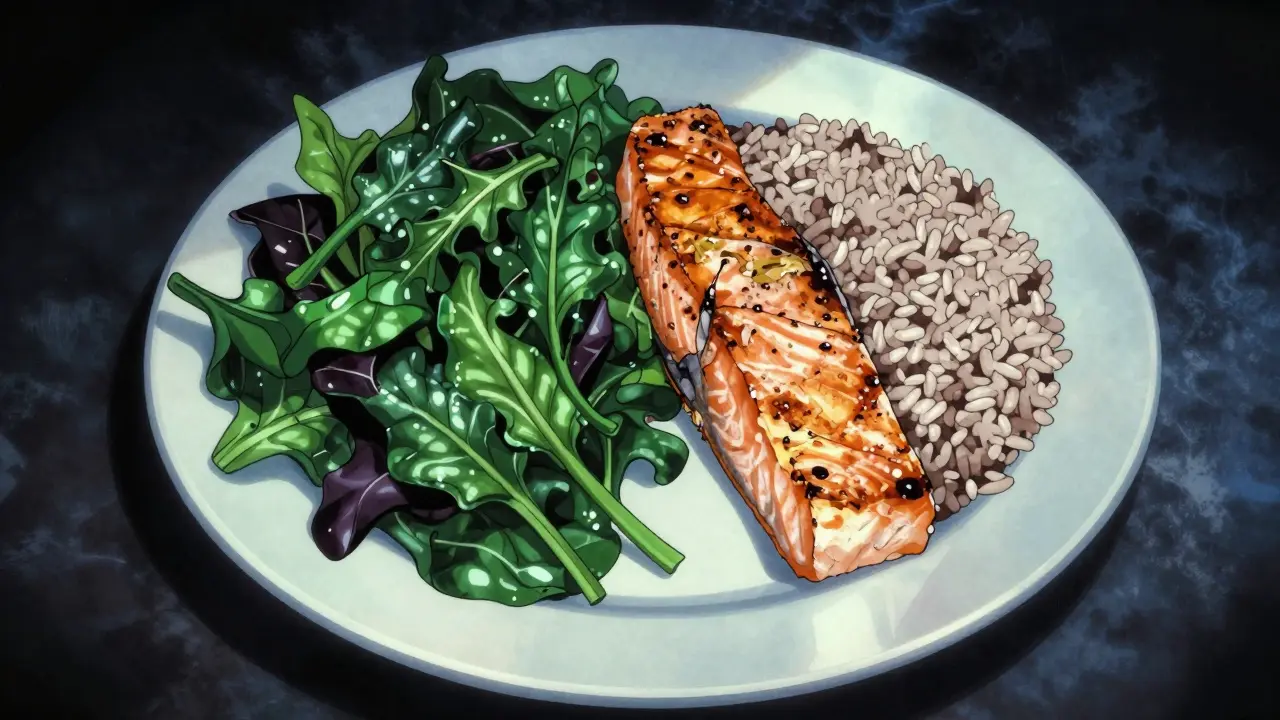
- Dinner: Baked salmon with quinoa and steamed broccoli.
This menu provides ample fiber from oats, chickpeas, and veggies. Protein comes from eggs, chicken, and salmon. Carbs are complex and low-GI. It is satisfying, nutritious, and scientifically sound.
Can I reverse prediabetes completely?
Yes, many people can return their blood sugar levels to normal range through lifestyle changes. The Diabetes Prevention Program showed that losing 5-7% of body weight and exercising regularly can reduce the risk of developing type 2 diabetes by 58%. Consistent dietary changes focusing on fiber, protein, and low-GI foods are key to this reversal.
How much fiber do I need daily for prediabetes?
Aim for 25 to 38 grams of fiber per day. Women generally need around 25 grams, while men need closer to 38 grams. Focus on soluble fiber found in oats, beans, and fruits, as it is particularly effective at slowing sugar absorption.
Is the Glycemic Index important for everyone?
While GI is most critical for those with prediabetes or diabetes, choosing low-GI foods benefits everyone by providing sustained energy and preventing cravings. However, do not rely solely on GI; consider the overall nutritional value of the food, including fiber and protein content.
What are the best snacks for stable blood sugar?
Combine a carbohydrate with a protein or healthy fat. Good options include Greek yogurt with berries, a handful of almonds, carrot sticks with hummus, or an apple with peanut butter. Avoid solitary carbs like crackers or candy bars, which cause rapid spikes.
Should I avoid all carbohydrates?
No, you should not eliminate carbs entirely. Your body needs glucose for energy. The goal is to choose complex, high-fiber carbohydrates like whole grains, legumes, and vegetables. Avoid refined sugars and white flour products that digest too quickly.