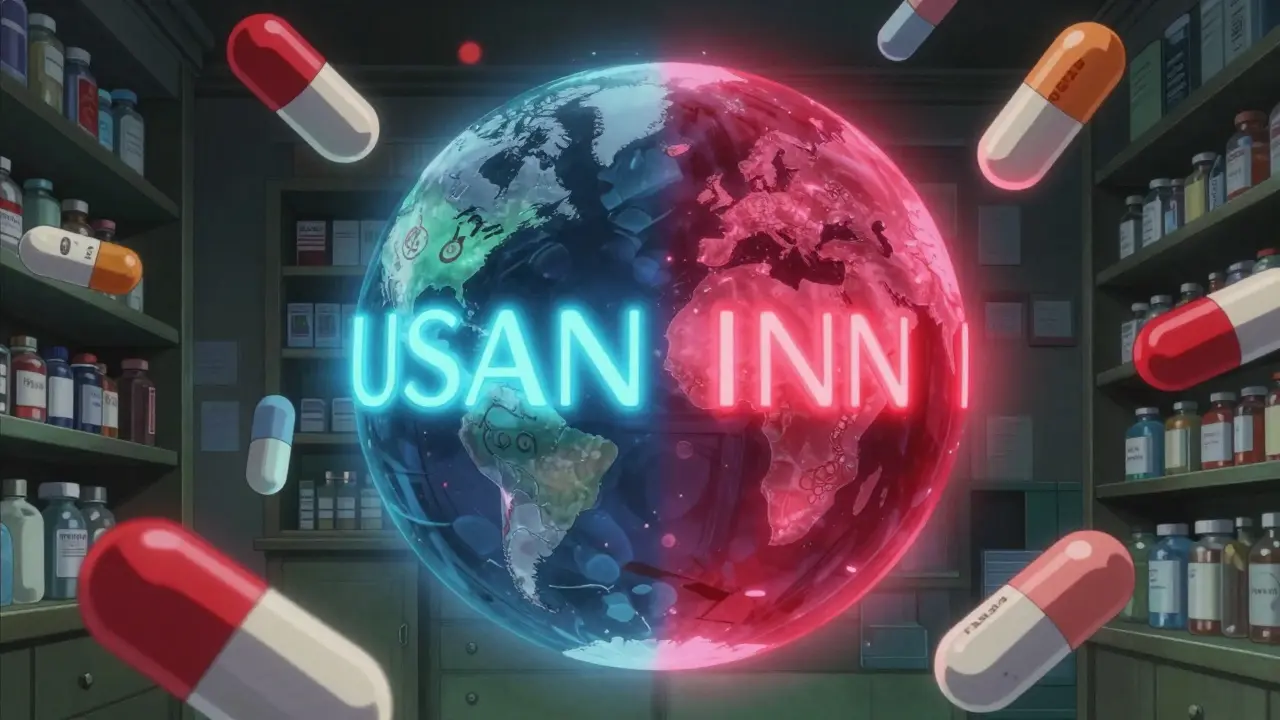
Have you ever wondered why the same painkiller is called acetaminophen in your local pharmacy but paracetamol on a trip abroad? Or why one blood pressure medication sounds completely different from another, even though they belong to the same family? The answer lies in a complex, global system of pharmaceutical nomenclature, which uses standardized systems like USAN (United States Adopted Name) and INN (International Nonproprietary Name) to ensure patient safety and clear communication. These systems are not just bureaucratic hurdles; they are critical safeguards designed to prevent life-threatening medication errors.
The Core Problem: Why Standardized Names Matter
Imagine a world where every doctor used their own nickname for drugs. Confusion would be rampant. To solve this, the medical community established nonproprietary naming systems. These names are unique, universally recognized identifiers for drug substances that belong to the public domain. Unlike brand names, which are trademarked by specific companies, generic names cannot be owned. This distinction is vital because it ensures that any manufacturer can produce a generic version of a drug using the same standard name, fostering competition and lowering costs for patients.
The primary goal of these systems is patient safety. Distinctive names help healthcare professionals distinguish between similar-looking or similarly-sounding medications. According to data from the IMS Institute for Healthcare Informatics, medication errors related to name confusion cost the US healthcare system approximately $2.4 billion annually. By enforcing strict naming conventions, organizations like the World Health Organization (WHO) and the USAN Council aim to reduce these costly and dangerous mistakes.
USAN vs. INN: Two Systems, One Goal
While the goal is universal clarity, there are two main players in the game: the USAN Council and the WHO’s INN Programme. Understanding the difference between them helps explain why some drug names vary across borders.
| Feature | USAN (United States Adopted Name) | INN (International Nonproprietary Name) |
|---|---|---|
| Governing Body | USAN Council (AMA, USP, APhA) | World Health Organization (WHO) |
| Established | 1964 | 1950 |
| Primary Scope | United States regulatory practice | Global standardization |
| Alignment Rate | ~95% with INN | ~95% with USAN |
| Key Exception Example | Acetaminophen, Albuterol | Paracetamol, Salbutamol |
The USAN Council is co-sponsored by three major US organizations: the American Medical Association (AMA), the United States Pharmacopeial Convention (USP), and the American Pharmacists Association (APhA). They focus on tailoring names to fit US medical practice and linguistic norms. On the other hand, the WHO’s INN Programme, established earlier in 1950, aims for true global standardization to facilitate international trade and scientific communication.
Despite their separate origins, these systems cooperate closely. About 95% of the time, the USAN and INN are identical. However, historical usage patterns have led to famous exceptions. For instance, the INN for the common fever reducer is paracetamol, while the USAN is acetaminophen. Similarly, the asthma drug known globally as salbutamol (INN) is called albuterol in the United States (USAN). These differences can cause significant confusion in multinational healthcare settings, highlighting the ongoing challenge of achieving perfect global harmony.

How Generic Names Are Built: The Stem System
If you look at a list of generic drug names, you’ll notice a pattern. Many end in the same way. This is not a coincidence. Both USAN and INN use a systematic “stem”-based convention. The stem, usually found in the suffix position, tells you something about the drug’s mechanism of action, therapeutic class, or chemical structure. The prefix is often a “fantasy” element-a euphonious combination of letters without specific meaning-designed to make the name distinctive and easy to pronounce.
Here are some common stems you might recognize:
- -prazole: Indicates proton pump inhibitors, such as omeprazole or esomeprazole, used for acid reflux.
- -statin: Identifies HMG-CoA reductase inhibitors, like atorvastatin, used to lower cholesterol.
- -mab: Denotes monoclonal antibodies. Substems provide more detail: -ximab for chimeric antibodies and -zumab for humanized antibodies.
- -feron: Used for interferon-related compounds, often in cancer or viral treatments.
- -virdine: Identifies non-nucleoside reverse transcriptase inhibitors for HIV treatment.
This system allows healthcare professionals to instantly recognize a drug’s class. If a doctor sees a new drug ending in “-statin,” they know immediately how it works and what side effects to monitor. However, as drug mechanisms become more complex, especially with biologics and gene therapies, the traditional stem system faces challenges. The USAN Council notes that stems are defined based on available knowledge at the time of naming, and while indications may evolve, the names typically remain unchanged.
The Journey from Lab to Label: The Naming Process
Getting a name approved is not a quick task. It takes roughly 18 to 24 months from initial application to final adoption. Pharmaceutical manufacturers must start this process early, typically during Phase 1 or early Phase 2 clinical trials, after an Investigational New Drug (IND) application becomes active.
- Proposal: The manufacturer submits up to six proposed names in ranked order of preference to both the USAN Council and the WHO INN Programme.
- Verification: Program staff conduct rigorous checks. They verify chemistry, search databases for conflicts with existing generic or proprietary names, and analyze linguistic and phonetic similarities to avoid confusion.
- Balloting: The USAN Council prepares a ballot with the firm’s proposals and any alternative suggestions. Members vote on the best option.
- International Review: Once the USAN accepts a name, it is submitted to the WHO. The WHO committee reviews it and either accepts it or offers an alternative.
- Public Objection Period: Accepted names are published for a mandatory four-month objection period. If no objections are raised-which is rare-the name becomes officially recognized.
This process is grueling. Industry reports suggest that an average of 15 to 20 name iterations are created and discarded before a viable candidate is selected. About 30-40% of naming requests require multiple review cycles due to conflicts. Furthermore, approximately 65% of named compounds never reach the US market because they fail during clinical development, yet their names remain reserved.

Brand Names vs. Generic Names: What’s the Difference?
While generic names are functional and informative, brand names (or proprietary names) are marketing tools. Companies spend millions developing catchy, memorable brand names to differentiate their products in a crowded market. Brand names are trademarked, giving the company exclusive rights to use them. In contrast, generic names are in the public domain.
For example, the generic drug atorvastatin is sold under the brand name Lipitor by Pfizer. Once the patent expires, other companies can sell generic atorvastatin, but they cannot use the name Lipitor. This dual system creates a dynamic market: brand names drive innovation and recovery of R&D costs, while generic names ensure accessibility and affordability for patients worldwide.
However, the rise of brand names introduces new risks. Similar-sounding brand names can lead to prescription errors. Regulatory bodies like the FDA require distinctiveness in both generic and brand names to mitigate this risk. The FDA’s 2022 guidance emphasizes the importance of distinctive names to prevent medication errors, acknowledging the practical challenges of achieving consistency.
Future Challenges: Biologics and Complex Therapies
The pharmaceutical landscape is changing rapidly. Biologics now represent 42% of global pharmaceutical sales, amounting to approximately $380 billion in 2023. These complex molecules, including monoclonal antibodies, antibody-drug conjugates, and gene therapies, do not always fit neatly into existing stem categories.
In response, the WHO updated its monoclonal antibody naming conventions in 2021 to accommodate newer formats. The USAN Council also refines stem definitions as needed. For instance, the “-prazole” stem was originally defined for “antiulcer agents” but now encompasses broader gastrointestinal applications. Looking ahead, both organizations are developing frameworks for emerging therapeutics. The USAN Council states it will create new stems only when existing schemes fail to accurately represent a compound and when substantial preclinical and clinical data support the change.
As we move toward more personalized medicine and complex biological treatments, the need for robust, adaptable naming conventions becomes even more critical. The collaboration between USAN, INN, and global regulatory bodies remains essential to ensure that patient safety is never compromised by the pace of innovation.
What is the difference between USAN and INN?
USAN (United States Adopted Name) is managed by the USAN Council for use primarily in the United States, while INN (International Nonproprietary Name) is managed by the WHO for global use. They align in about 95% of cases, but historical differences exist, such as acetaminophen (USAN) vs. paracetamol (INN).
Why do drug names have stems like -statin or -mab?
Stems indicate the drug's therapeutic class or mechanism of action. For example, -statin identifies cholesterol-lowering drugs, and -mab denotes monoclonal antibodies. This helps healthcare professionals quickly identify a drug's purpose and potential side effects.
How long does it take to get a generic drug name approved?
The process typically takes 18 to 24 months. Manufacturers submit proposals during early clinical trials, and the names undergo rigorous review by the USAN Council and WHO to ensure uniqueness and safety.
Can a company trademark a generic drug name?
No. Generic names (USAN/INN) are in the public domain and cannot be trademarked. Only brand names (proprietary names) can be trademarked by specific companies.
Why are some drug names different in the US compared to other countries?
Historical usage and regional medical practices lead to differences. For example, albuterol (USAN) is salbutamol (INN). While efforts are made to harmonize names, these legacy differences persist and can cause confusion in international travel or care.