Contraceptive Interaction Checker
Select the antibiotic you are taking to see how it may interact with your hormonal birth control.
Rifamycins
e.g., Rifampin, Rifadin
Other Rifamycins
e.g., Rifabutin
Common Antibiotics
e.g., Penicillin, Amoxicillin, Azithromycin
Significant Interaction Warning
Mechanism: Strong CYP450 enzyme induction. Your liver processes hormones much faster, dropping levels below the threshold needed to stop ovulation.
Recommended Action:
- Use a barrier method (condoms) immediately.
- Continue backup method for 28 days after the last dose.
- Consult your doctor about a non-hormonal Copper IUD.
Moderate Interaction Risk
Mechanism: Moderate enzyme induction. While less potent than Rifampin, these drugs can still reduce the effectiveness of your hormones.
Recommended Action:
- Use a barrier method as an added precaution.
- Discuss the specific drug potency with your healthcare provider.
Negligible Interaction Risk
Mechanism: No significant CYP450 enzyme induction. These medications generally do not affect the metabolism of contraceptive hormones.
Recommended Action:
- Continue your birth control as prescribed.
- Always follow the specific labeling for your medication.
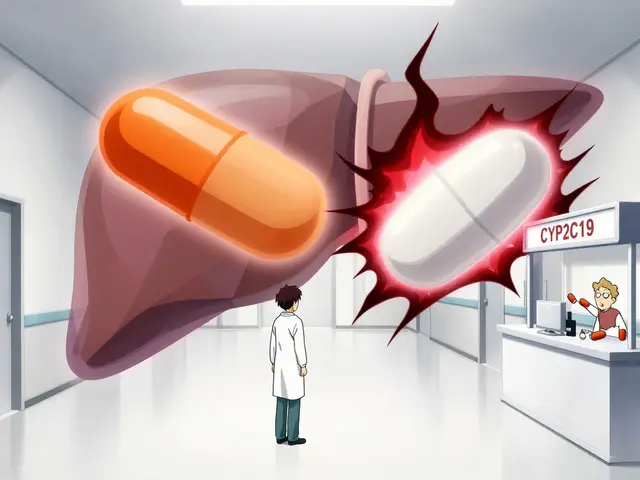
Imagine doing everything right-taking your birth control pill at the exact same time every day-and still ending up with a positive pregnancy test. For most people on the pill, the failure rate is tiny, around 0.3%. But when you add Rifampin is a potent rifamycin antibiotic used primarily to treat tuberculosis and other bacterial infections. Also known as Rifadin, it is famous in the medical world for being an enzyme inducer. into the mix, those odds change drastically. This isn't just a theoretical risk; it's a well-documented clinical interaction that can lead to breakthrough ovulation.
How Rifampin Sabotages Your Birth Control
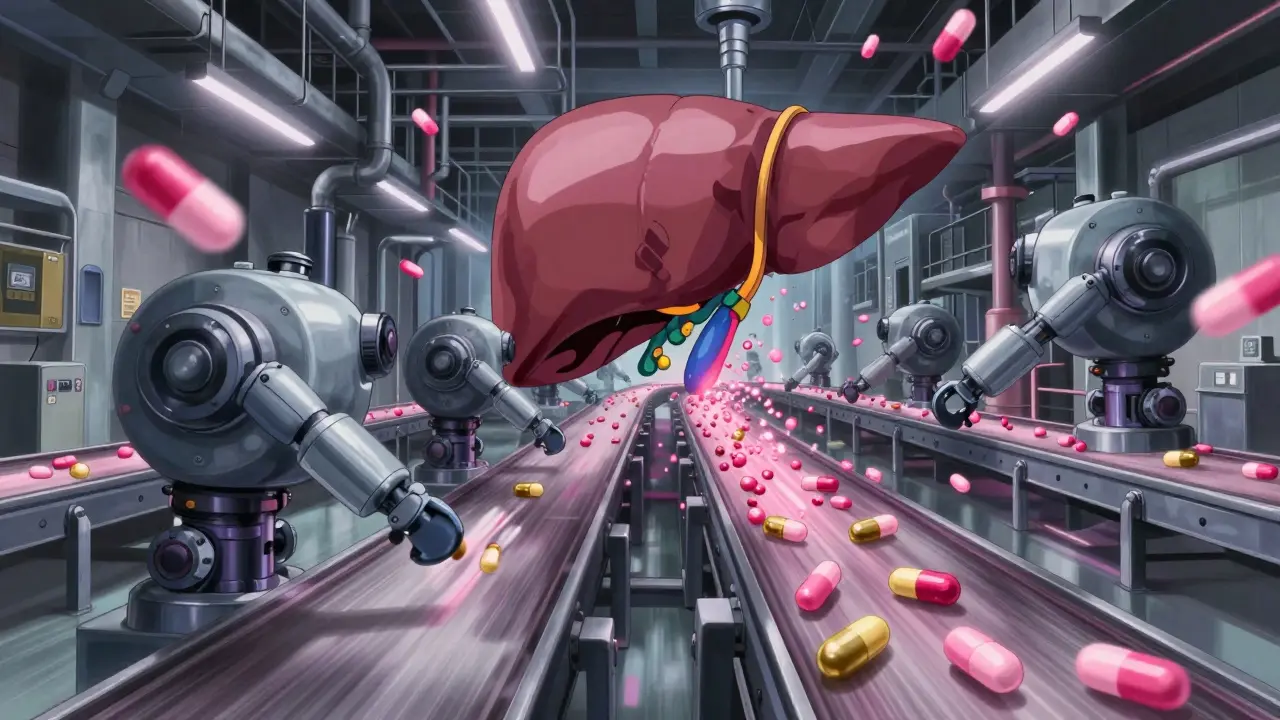
The problem isn't that rifampin stops your body from absorbing the pill. Instead, it attacks the hormones once they are already in your system. Your liver uses a group of enzymes called Cytochrome P450 (specifically CYP3A4) to break down medications. Rifampin acts like a turbo-button for these enzymes, forcing your liver to process contraceptive hormones much faster than normal.
When your liver clears these hormones out of your blood at high speed, the levels drop below the threshold needed to keep your ovaries "asleep." This is where breakthrough ovulation happens: your body suddenly releases an egg despite the birth control. A 2024 systematic review from the National Institutes of Health (NIH) found that progestin exposure-the key hormone for stopping ovulation-dropped by 30% to 83% in women taking both drugs. Ethinyl estradiol, the estrogen component, saw similar drops between 42% and 66%.
Rifampin vs. Other Antibiotics: What's the Real Difference?
You've probably heard a vague warning from a pharmacist that "antibiotics can make your pill less effective." For the vast majority of antibiotics, there is actually very little evidence to support this. Whether it's penicillin or azithromycin, most don't touch your hormone levels. Rifampin is the outlier. It is widely considered the only antibiotic with definitive, high-quality evidence of reducing hormonal contraceptive effectiveness through enzyme induction.
There are other drugs in the same family, like Rifabutin, which also causes this effect, but usually to a lesser degree. If you're taking a standard course of amoxicillin for a sinus infection, the risk is negligible. But if you're on a rifamycin-based regimen for something like TB, the risk is systemic and significant.
| Antibiotic Type | Mechanism of Interaction | Risk Level | Effect on Hormones |
|---|---|---|---|
| Rifampin | Strong CYP450 Enzyme Induction | High | Significant decrease in AUC/Cmax |
| Rifabutin | Moderate Enzyme Induction | Moderate | Lower decrease than Rifampin |
| Non-Rifamycin (e.g., Penicillins) | None/Negligible | Very Low | No significant change observed |
The CDC's Warning and Clinical Reality
The Centers for Disease Control and Prevention (CDC) doesn't mince words here. They classify the interaction between rifampin and combined hormonal contraceptives (CHCs) as a Category 3 interaction. In plain English, this means the risks of using the pill while on rifampin generally outweigh the benefits. It's not a suggestion; it's a warning that your primary method of birth control is likely compromised.
This isn't just based on lab data. Since the 1970s, there have been numerous case reports of women becoming pregnant while adhering perfectly to their oral contraceptive schedule. One woman shared her experience on a support forum, noting that her OB/GYN confirmed the rifampin interaction was the sole cause of her unexpected pregnancy despite "perfect pill adherence." This highlights the danger: you can't "out-discipline" this interaction by taking the pill at the exact right minute; the liver is simply working too fast.
How to Protect Yourself During Treatment
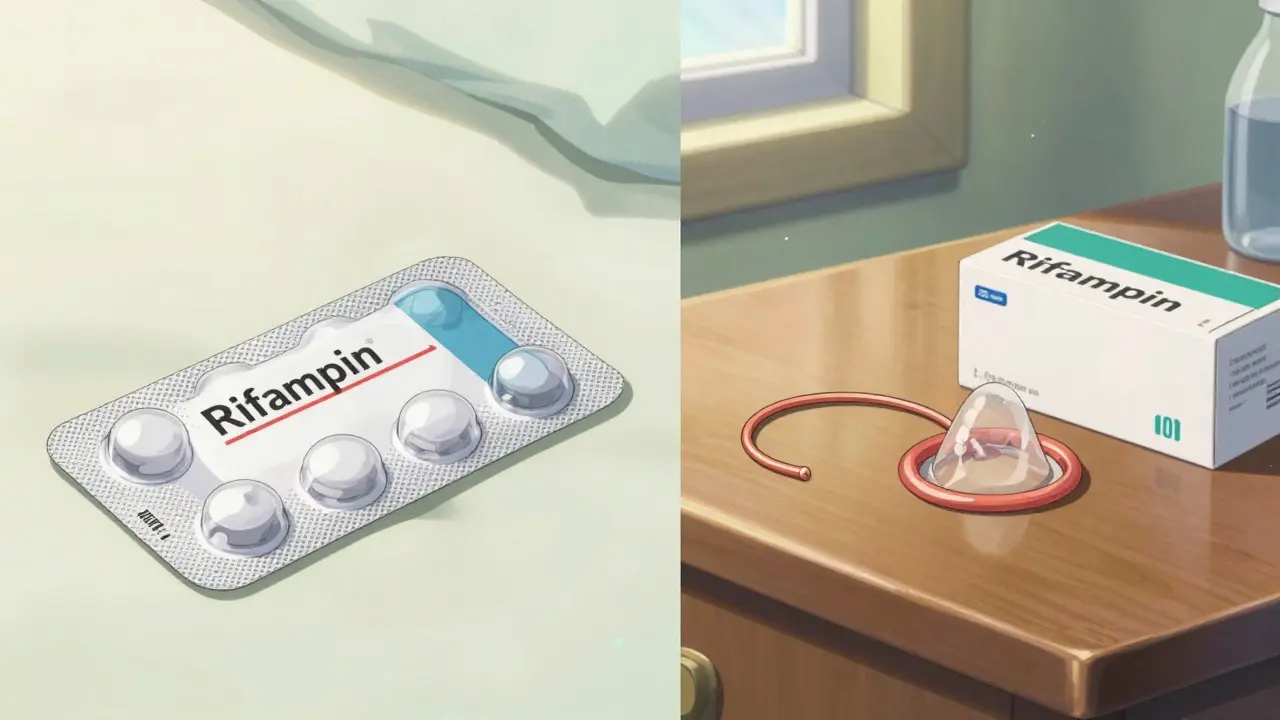
If you are prescribed rifampin, you need a backup plan. Because rifampin changes how your liver functions, the effect doesn't disappear the moment you swallow your last pill. The enzyme induction persists for a while. The CDC recommends using a backup method-like condoms-for the entire duration of the therapy and for 28 days after you stop taking the medication.
Depending on your health goals, you might want to switch to a method that doesn't rely on the liver's metabolism. Copper IUDs are a gold standard here because they are non-hormonal and completely unaffected by enzyme inducers. Progestin-only implants are another option, though you should discuss the specific formulation with your doctor, as some hormonal methods are more susceptible to induction than others.
Summary of Best Practices for Patients
- Don't rely on the pill alone: Use a barrier method (condoms) immediately upon starting rifampin.
- Plan for the "afterglow": Continue backup contraception for 28 days after the last dose of rifampin.
- Consult your provider: Ask about switching to a non-hormonal IUD if you'll be on rifampin for several months.
- Avoid "higher dose" myths: Some suggest taking higher-estrogen pills to compensate, but there is limited evidence that this actually prevents ovulation in the presence of strong enzyme induction.
Will any antibiotic make my birth control fail?
Generally, no. Most antibiotics (like those used for strep throat or UTIs) do not interfere with hormonal contraceptives. Rifampin and its close relatives (rifamycins) are the primary exceptions because they induce liver enzymes that break down hormones. If you are taking a common antibiotic, the risk of breakthrough ovulation is extremely low, but you should always check the specific drug's labeling.
Why do I need backup birth control for 28 days after stopping rifampin?
Rifampin doesn't just block a process; it physically increases the amount of enzymes in your liver. These enzymes don't vanish the moment the drug leaves your system. It takes several weeks for your liver's enzyme levels to return to their baseline. During this window, your body may still be metabolizing contraceptive hormones too quickly to prevent ovulation.
Are hormonal implants or IUDs affected by rifampin?
Copper IUDs are completely unaffected because they don't use hormones. Hormonal IUDs and implants are generally more robust than oral pills, but enzyme inducers like rifampin can still reduce their effectiveness. The safest route is to use a barrier method as a backup or switch to a non-hormonal option during treatment.
What is "breakthrough ovulation" exactly?
Breakthrough ovulation occurs when the contraceptive hormones in your blood drop below the minimum level required to suppress the ovaries. Even if you are taking your pill, your body "tricks" itself into thinking there isn't enough progesterone/estrogen to prevent a cycle, causing the release of an egg and creating a window for pregnancy.
Can I just take a higher dose of my birth control to make up for the rifampin?
Some clinicians have suggested using higher-dose estrogen pills (e.g., 50 mcg of ethinyl estradiol), but this is not a standard or guaranteed fix. Because rifampin's induction of the P450 system is so powerful, simply increasing the dose may not be enough to consistently stop ovulation. Using a non-hormonal backup method is the only reliable way to prevent pregnancy.