Imagine handing a patient their blood pressure medication. You grab the bottle, scan it, and hand it over. But what if that bottle contains the wrong strength because you confused the generic name with a look-alike brand? It sounds like a minor mix-up, but in pharmacy practice, it can be fatal. Generic drug competency is the specialized knowledge required by pharmacy technicians to accurately identify, classify, and manage generic medications versus their brand-name counterparts. This skill isn't just about memorizing lists; it is the frontline defense against medication errors. In the United States, roughly 90% of all prescriptions dispensed involve generic medications. When technicians lack precise knowledge of these drugs, the consequences ripple through the entire healthcare system. Data from the Institute for Safe Medication Practices (ISMP) indicates that confusion between generic and brand names contributes to 10-15% of medication incidents, leading to thousands of adverse events annually. For anyone entering or working in the pharmacy field, understanding the current competency standards is not optional-it is a matter of patient survival.
The Regulatory Framework Behind Technician Training
You might wonder who decides what a pharmacy technician needs to know. The answer lies in a complex web of regulatory bodies, each setting specific benchmarks for Pharmacy Technician Certification Board (PTCB) is the primary national certifying body for pharmacy technicians in the United States, responsible for administering the PTCE exam and defining core knowledge domains. Since launching its Certified Pharmacy Technician (CPhT) program in 2000, the PTCB has continuously updated its standards. A major shift occurred in 2016 when they revised the Pharmacy Technician Certification Examination (PTCE) to ensure pharmacology, including generic drug knowledge, made up a significant portion of the test. By 2026, the stakes have risen even higher. The PTCB’s updated CPhT Knowledge Outline now mandates that technicians demonstrate proficiency in generic names, brand names, and medication classifications. This section comprises approximately 14% to 18% of the certification examination. The Accreditation Council for Pharmacy Education (ACPE) mirrors this focus, requiring programs to teach technicians how to identify strengths, dosage forms, and physical appearances of common drugs. Meanwhile, the Department of Veterans Affairs (VA) established its own rigorous standard, VA-0661, in 2018. This standard requires technicians to possess expert knowledge of pharmaceutical nomenclature, especially when handling controlled substances. These frameworks exist to close the gap between theoretical knowledge and practical application, ensuring that every technician, whether in a hospital or a community store, speaks the same language of medication safety.
Core Competencies: What Technicians Must Know
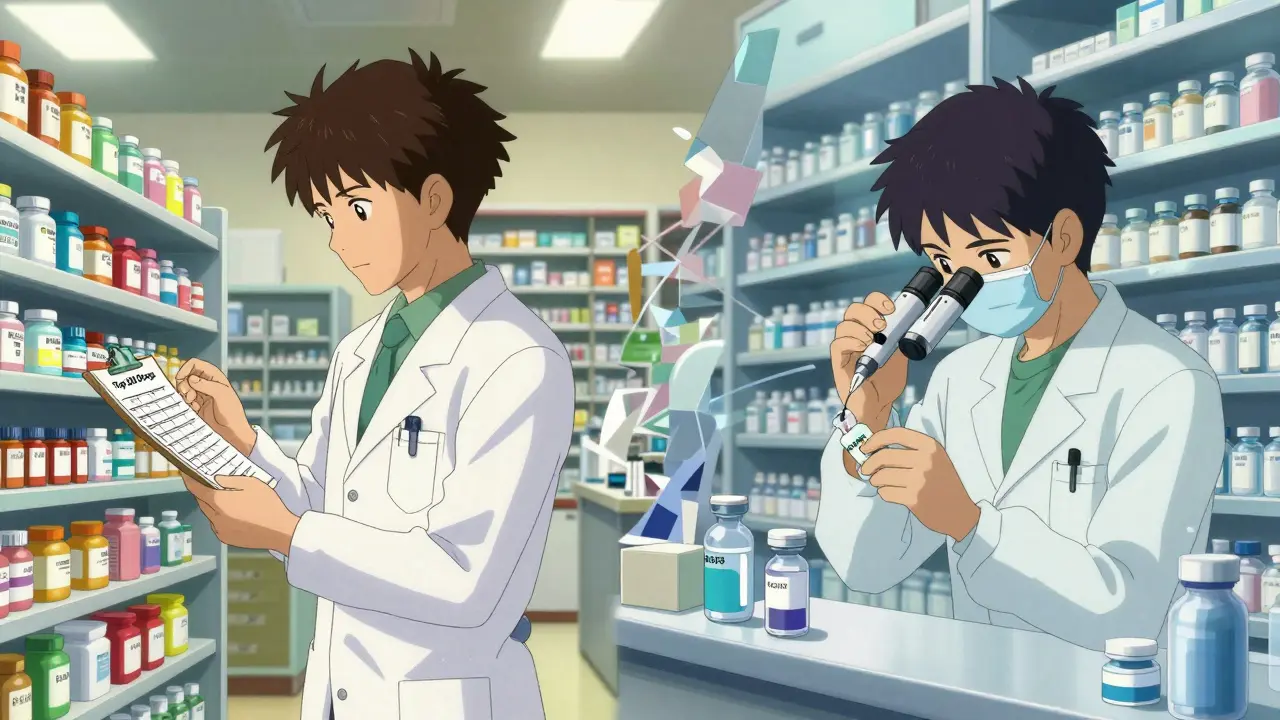
So, what exactly does "competent" look like on the job floor? It starts with volume. Most certification bodies expect technicians to recognize at least 100 to 200 of the most commonly prescribed medications. The PTCB emphasizes the "Top 200 Drugs," while other resources like RxTechExam focus on a "Top 100" list that includes generic name, brand name, drug classification, schedule, and therapeutic use. But knowing the name is only half the battle. True competency involves understanding therapeutic duplications. If a patient takes two different brands of ibuprofen without realizing they are the same generic drug, they risk overdose. Technicians must spot this immediately. Here is a breakdown of the key attributes defined by major standards:
| Organization | Key Focus Area | Required Drug Knowledge Scope | Assessment Method |
|---|---|---|---|
| PTCB | Generic/Brand names, Classifications | Top 200+ medications | PTCE Exam (14-18% content) |
| ACPE | Dosage forms, Physical appearance, Routes | Commonly used conditions | Programmatic Competency Review |
| ASHP | High-alert meds, Brand/Generic equivalence | Hospital-specific formulary | Model Curriculum Assessment |
| VA (HT38) | Regulatory standards, Controlled substances | 100% accuracy on Schedule II-V | Quarterly Competency Checks |
The Human Cost of Knowledge Gaps
Let's talk about why this matters beyond passing a test. A 2023 study from the University of Utah College of Pharmacy tracked 1,247 technicians across 42 pharmacies. The results were stark: technicians who scored below 70% on generic drug identification assessments had error rates 3.2 times higher than their peers. That statistic translates directly to real-world harm. Dr. Lucinda Maine, CEO of the American Association of Colleges of Pharmacy (AACP), testified before Congress in March 2025 that inadequate generic drug knowledge among technicians contributes to 12% of all medication errors reported to the ISMP. This costs the healthcare system an estimated $2.4 billion annually. These aren't abstract numbers. They represent patients who received the wrong drug, delayed treatment, or suffered adverse reactions due to simple identification failures. The Institute for Safe Medication Practices specifically recommends that technicians identify at least 200 medications by both brand and generic names with 100% accuracy on high-alert drugs. Currently, only 65% of certified technicians meet this standard, highlighting a critical gap in our training infrastructure.
Effective Strategies for Mastering Generic Drugs
If you are a student or a new technician, staring at a list of 200 drug names can feel overwhelming. Rote memorization rarely works long-term. Instead, successful technicians use structured learning pathways. Entry-level programs typically allocate 60-80 hours of focused study to medication names. Here are practical strategies that actually work:
- Use the Top 200 List: Start with the most frequently dispensed medications. Mastering these first gives you immediate confidence and covers the majority of daily tasks.
- Group by Therapeutic Class: Instead of memorizing A-Z, group drugs by what they treat. For example, learn all ACE inhibitors together. This helps you understand mechanisms and spot therapeutic duplications.
- Leverage Visual Cues: As one Reddit user noted, grouping drugs by color, shape, and imprint works better for visual learners. Create flashcards that show the pill image alongside the generic and brand names.
- Practice with Look-Alike/Sound-Alike (LASA) Pairs: The ISMP identifies 37 high-risk pairs, such as hydroxyzine and hydralazine. Drill these specifically to avoid dangerous mix-ups.
Challenges in a Rapidly Changing Market
One of the biggest frustrations for technicians is the pace of change. The pharmaceutical market sees 15-20 new generic drugs enter monthly. Manufacturers change, imprints shift, and biosimilars add another layer of complexity. The ASHP Model Curriculum now includes biosimilar naming conventions as an emerging competency area, reflecting the 25 biosimilars approved by the FDA since 2015. This constant flux creates mobility challenges. California requires knowledge of 180 specific medications, while Texas mandates only 120. A technician moving states may find themselves unprepared for local formulary demands. Furthermore, 57% of technicians report that at least five drugs they learned for certification changed manufacturers or names within 18 months of getting certified. To combat this, leading organizations like the VA now mandate quarterly competency assessments, requiring 90% accuracy on randomly selected medications from an approved list of 300 high-use drugs. Staying current is no longer a one-time task; it is a continuous professional obligation.
Future Trends in Competency Standards
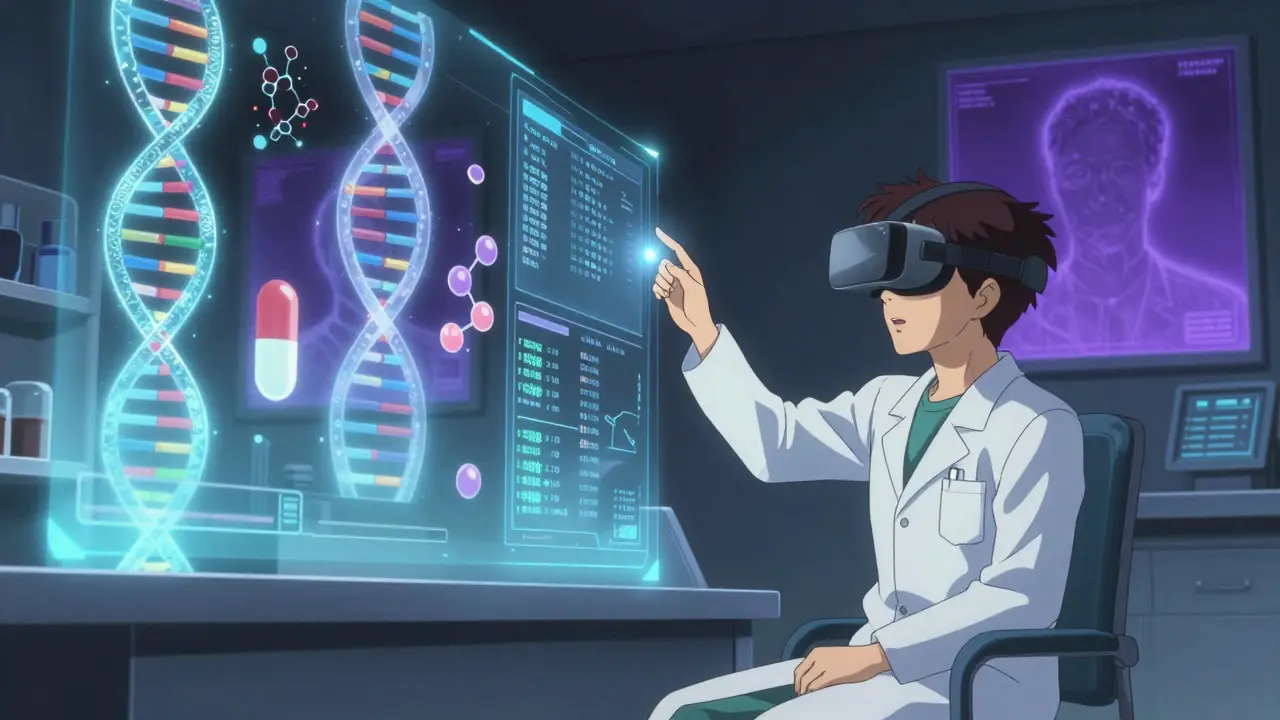
Where is this heading? The industry is shifting from static lists to dynamic, technology-integrated training. Walmart implemented AI-powered drug identification training in 2024, reducing onboarding time by 35% while improving accuracy scores by 22%. By 2030, experts predict that competency standards will evolve to include pharmacogenomic considerations for personalized generics. This means technicians won't just need to know what a drug is, but how a patient's genetic profile might affect its efficacy. However, concerns remain. Dr. Karen Smith of the University of North Carolina argues that static drug lists cannot keep pace with market changes. The future likely holds more frequent, shorter assessments rather than single massive exams. For now, the best preparation is a blend of deep foundational knowledge and adaptability. Embrace the change, stay curious, and never underestimate the power of knowing your generics.
How many generic drugs do I need to know for the PTCB exam?
The PTCB generally expects technicians to be proficient with the "Top 200" most commonly prescribed medications. This includes knowing the generic name, brand name, drug classification, and therapeutic use. The generic drug knowledge section makes up approximately 14-18% of the total exam content.
What is the difference between PTCB and NHA certification regarding generic drugs?
There is a notable gap in scope. The PTCB certification requires knowledge of over 200 medications, whereas the National Healthcareer Association (NHA) ExCPT exam assesses approximately 150 medications. This creates a 25% difference in expected knowledge breadth, making PTCB slightly more rigorous in terms of volume.
Why is generic drug competency so important for patient safety?
Confusion between generic and brand names contributes to 10-15% of medication errors. Since 90% of prescriptions are generic, technicians must accurately identify them to prevent therapeutic duplication, dosing errors, and adverse drug events. Proper competency reduces dispensing errors significantly, with studies showing 22% fewer errors when technicians score above 90% on identification tests.
How often should pharmacy technicians update their generic drug knowledge?
Given that 15-20 new generics enter the market monthly, continuous learning is essential. The VA requires quarterly assessments. For most technicians, reviewing new additions and changes to formularies monthly is recommended. Additionally, continuing education units (CEUs) often cover new drug approvals and safety communications.
Are there state-specific differences in generic drug requirements?
Yes. While all 50 states require some level of generic drug knowledge, the specifics vary. For example, California requires knowledge of 180 specific medications, while Texas mandates only 120. Some states, like Utah, have specific measurable competencies for locating drugs by therapeutic class. Always check your state board of pharmacy regulations for local requirements.